Editor’s note: This story focuses on mental health and contains a reference to suicidal thoughts. If you or someone you know may be experiencing a mental health crisis or has thoughts of suicide, contact Hawai‘i CARES 988 by calling or texting 988. The call center is available 24/7.
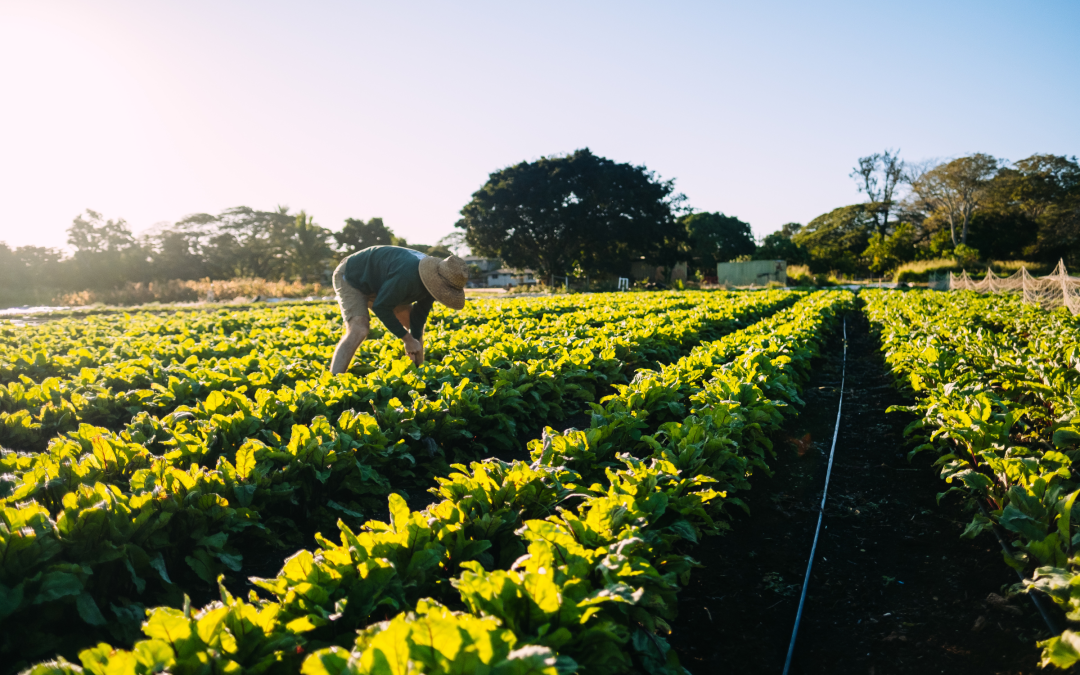
Knee and thigh deep in a Kailua lo‘i, a group of O‘ahu paramedics and emergency medical technicians are doing more than pulling weeds and tending to emerging kalo. They’re also releasing some of the stress and trauma that they’ve accumulated through their jobs.
Society relies on first responders to be on the front lines during the worst moments in people’s lives, providing critical aid at car accidents, shootings, burglaries, medical emergencies, fires and other crises. But the trauma and grief that accumulates from continuously responding to those calls can have lasting impacts on their mental well-being.
“Those bad critical calls affect you,” said retired O‘ahu paramedic Mark Kunimune. “But it’s the everyday calls, that everyday grind that affects you.”
That’s why he’s been arranging for student and active medics and other first responders to engage in Native Hawaiian cultural practices, like working in the lo‘i, participating in ocean-focused healing sessions and getting lomilomi massages. It’s one of several community-based initiatives drawing on cultural practices to support first responders’ mental well-being.

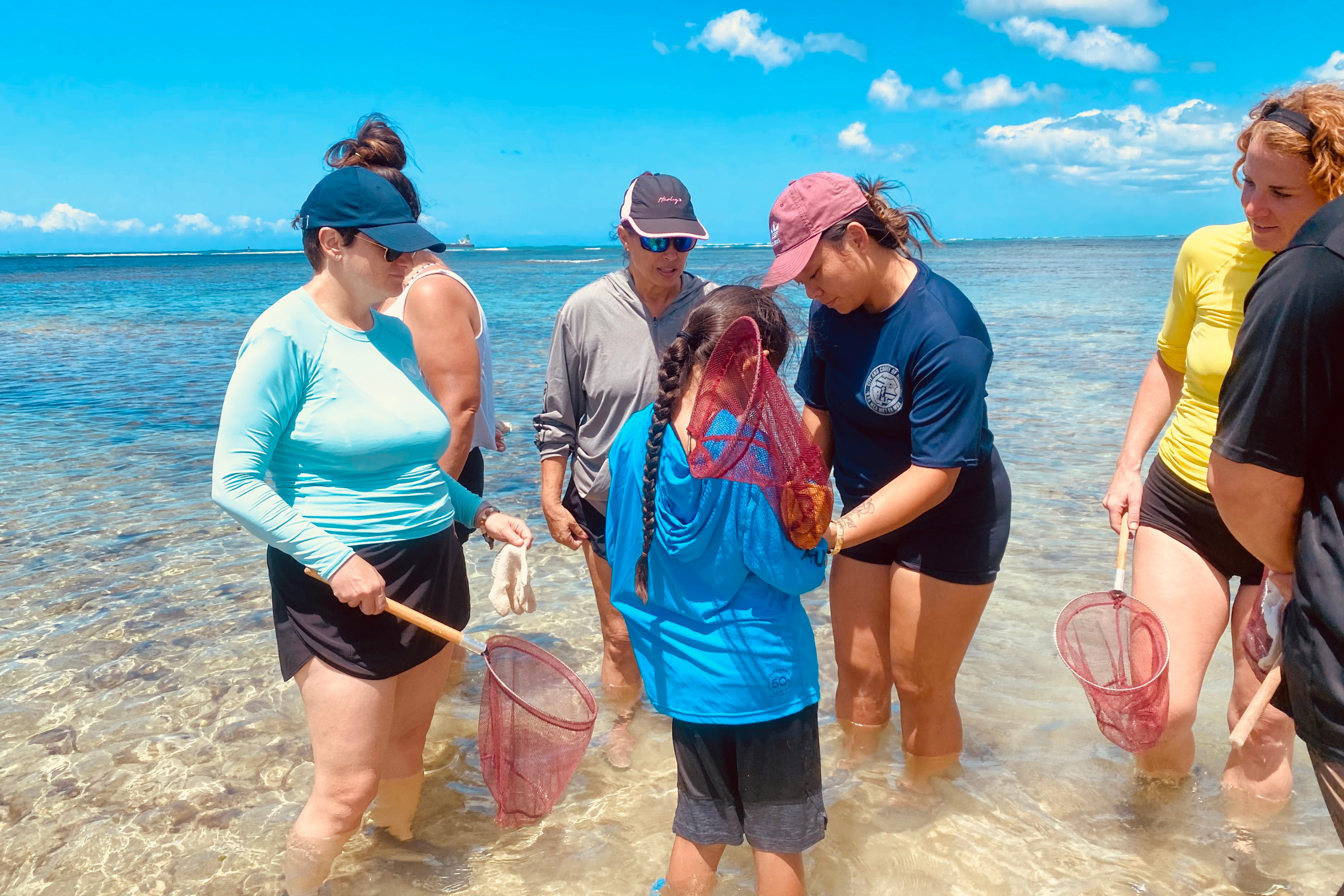
Ho‘ohanu takes first responders to Mauliola Ke‘ehi. Together, the group will paddle to Mokauea Island, listen to stories about the area’s history and sea life, and engage in meditations and grounding activities. | Courtesy: Mark Kunimune, Ho‘ohanu
Engaging in Cultural Practices
As an instructor in Kapi‘olani Community College’s Emergency Medical Services program, Kunimune began engaging students and later field instructors—who were working paramedics—in cultural activities about eight years ago. The groups would visit the lo‘i, then the beach, and then have lomilomi practitioners come and work on them.
It was originally a way to integrate Hawaiian culture into the curriculum, but over time he realized that the activities were helping the students and medics heal. Over the years, he has engaged about 200 students and active first responders in Native Hawaiian cultural practices through KCC’s EMS program and Ho‘ohanu, the nonprofit he launched in 2023 after retiring from KCC.
At the lo‘i, first responders wade through knee-high mud to pull weeds, remove invasive snails and tend to kalo while hearing the story of Hāloa, the first Hawaiian, and about the spiritual connection Native Hawaiians have with kalo. Those stories help connect the first responders to the land. As one lā‘au lapa‘au practitioner told Kunimune, the ‘āina draws bad energy out as first responders work and replenishes them with good energy,
He’s also taken groups to Ke‘ehi on O‘ahu’s south side, where they’ll visit with Mauliola Ke‘ehi, a nonprofit that focuses on ocean-centered healing. Mauliola Ke‘ehi’s team will share mo‘olelo about Ke‘ehi’s history and sea life, engage first responders in meditations and grounding activities, and paddle canoes to the tidal island of Mokauea.
Inevitably, participants will venture off on their own and look out at the reef. “Just being out in the water and ocean, and the breeze just coming down the valleys, it’s just so cleansing,” Kunimune said.
Mauliola Ke‘ehi’s facilitators tell him they can see the heaviness fall away from some of the medics as they stand in the shallow water. That type of distinct change has also been seen when visits occur after traumatic calls.
At the request of a district chief in Honolulu’s Emergency Medical Services Department, Kunimune took medics to the lo‘i after three people were killed in a 2019 Kaka‘ako accident, one of Hawai‘i’s deadliest pedestrian accidents in more than a decade.
The lo‘i’s farm managers later told Kunimune that they saw medics arrive with a darkness about them with their shoulders hunched over. When they left, they were standing up straight, smiling and looking lighter.
Part of that comes from first responders simply talking with their peers while they’re working in the lo‘i. Kunimune said those casual conversations after bad or stressful calls are probably one of the most effective ways to destress.
“Being able to do that in the lo‘i is highly effective because you have the combination of you’re there with your peers who you trust already and you will share pretty openly, too, as well as just the physical, spiritual emotional aspects of the lo‘i,” he said.
Community Programs are Nurturing the Health and Resilience of Hawai‘i First Responders and Their Families
These programs make up a growing community-based support system, helping those on the front lines and their families cope with the challenges of the job and build strong relationships.

Connection to Healing and Well-being
Native Hawaiians have long understood that connection to culture and ‘āina are integral to healing and well-being, and they’ve affirmed this connection through centuries of observation, practice, refinement and lived experience.
“Hawaiians have been doing this kind of cleansing for generations, and so all we’re doing is just bringing it to light,” Kunimune said.
Hawai‘i Island nonprofit Vibrant Hawai‘i shared that mindset when it launched a pilot study, called No Nā Pua, to examine how culture-based practices, like mālama ‘āina, can support first responders’ mental health and well-being.
Its goal was to develop academic research to help amplify awareness of Hawaiian ancestral teachings. That way, Western institutions that control program funding and insurance coverage might more readily accept them.
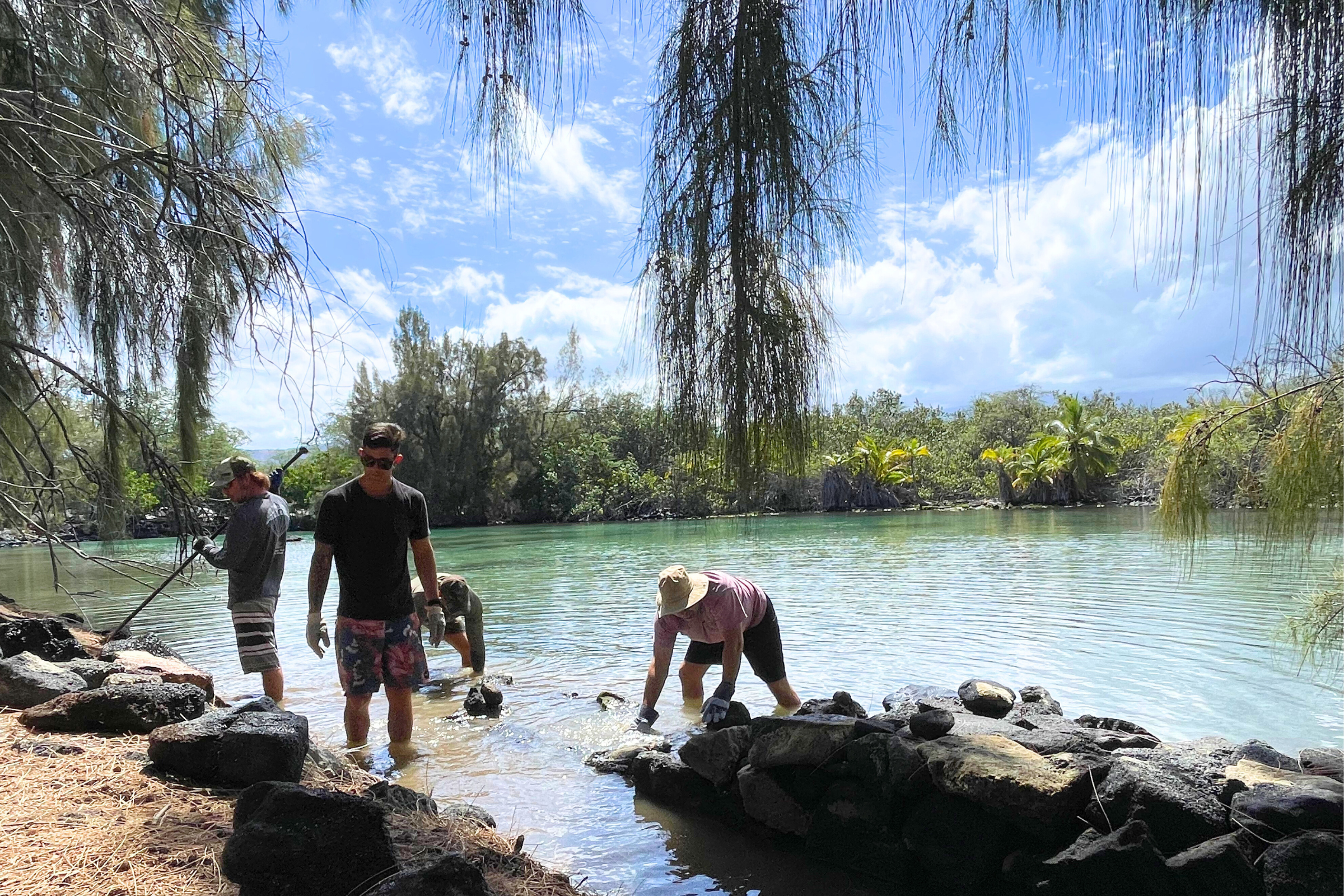
As part of the pilot study, 24 active and retired Hawai‘i County firefighters helped restore North Kona’s Kīholo fishpond and Hilo’s Hale o Lono fishpond over multiple workdays.
Each session lasted about three hours, starting with a grounding in place. Participants practiced kilo and being aware of what’s occurring in the surrounding environment. Their work then transitioned to everything from clearing trees to pulling weeds to rebuilding the fishponds’ walls.
Along the way, they heard oli and mo‘olelo. Janice Ikeda, CEO of Vibrant Hawai‘i, said those activities helped create a spiritual connection to the ‘āina as participants worked.
The pilot study’s findings showed reductions in Post-Traumatic Stress Disorder symptoms and improvements in overall well-being. It also affirmed the importance of community and connection as mental health interventions for first responders.
Several firefighter participants commented that restoring the fishponds enabled participants to form more meaningful connections with their peers without the consumption of alcohol. Drinking tends to be common at social events in the profession, which doesn’t always lead to deep relationships.
Lance Uchida spent 26 years with the Hawai‘i Fire Department before retiring as deputy chief. He helped recruit volunteers for the study and attended one of the workdays at each fishpond.
He said he could see how some participants were carrying a lot of burden at the beginning of the workdays but then left looking like they had less weight on their shoulders.
“A lot of times their personal lives get affected from what they see and deal with at work that they don’t understand and it just kind of like snowballs and just builds,” he said.
A Space to Reset
In 2023, a group of four Maui paramedics and EMTs gathered on the beach. They were part of the crews that responded to the August wildfires that killed 102 people and destroyed the town of Lahaina.
While on the shoreline, a Hawaiian cultural practitioner performed an oli and then had the medics go to the water’s edge and find a rock to hold. They put into the rock all the things they wanted to let go of, returned the rock to the ocean, and then entered the water to cleanse themselves of that night.
The ocean cleansing ceremony was followed by a peer debriefing aimed to encourage participants to talk through what happened and normalize stress reactions. While these debriefings are often done after critical calls, this was the first time it was preceded by an ocean cleansing.
Ho‘ohanu helped organize two days of these ceremonies and debriefings. The second day, 15 new medics showed up, plus the four from the prior day. Kunimune said he had never attended a debriefing like that where every person shared their story of what happened in Lahaina. Many said that they felt guilty that they didn’t do enough.
“What was powerful was the fact that, because they had all gotten together, rather than being isolated and thinking that you’re the only one that’s feeling this way, they heard and experienced that, ‘Oh, I wasn’t the only one that felt that way,’” he said. “And so that, I think, in itself, was very, very healing for them because they realized that they were not alone.”
One of Ho‘ohanu’s goals is to see emergency service departments incorporate Native Hawaiian cultural activities into their operations, whether that’s making it part of the debriefing process after critical calls or setting aside days for these activities on a monthly or quarterly basis. Currently, first responders participate in Ho‘ohanu’s programs on their days off.
“It makes sense if you do this little practice of just pausing after a call to just cleanse and rejuvenate yourself, that can reduce the amount of stress that is built up over the years,” he said.
Kunimune is also part of a University of Hawai‘i and state Department of Health project to prevent suicides among first responders and farmers using culture and peer connection. Seventeen paramedics and EMTs from around the state are being trained as mentors who can recognize and provide emotional support when their colleagues are going through difficult times.
As part of the program, they visited Mauliola Ke‘ehi, Ho‘okua‘āina’s lo‘i in Kailua and Hawai‘i Volcanoes National Park. While in the national park, they helped collect native plant seeds in a koa forest and pull invasive weeds while learning about the native ecosystem and plants.

‘This is a Tough Job’
There’s increasing recognition that serving as a first responder can affect long-term mental health.
“When I was a paramedic, the philosophy was if you can’t handle the job you don’t belong, so suck it up,” Kunimune said. “And there’s still some of that stigma there, but what we found over the years is that this is a tough job.”
The trauma and stress that first responders face can cause symptoms like irritability and anger, insomnia, isolation, relationship problems and not taking care of one’s health. Sometimes, it can also lead to substance use and suicidal thoughts.
Alicia Rodriguez is a Hawai‘i psychologist who works with police officers, firefighters, medics and dispatchers around the state. She said first responders are often expected to hold it together while witnessing constant heartbreak, so there’s no time to feel or process their own emotions.
“What happens is that that gets so reinforced that they never then have an opportunity, nor the skill set, to know how to unpack it at some point,” she said. “And so, it just layers up and layers up. And that’s where you start to see the pressure kind of build.”
Rodriguez, who is a board member of Ho‘ohanu, said that Native Hawaiian cultural activities can play an important role in first responders’ healing, though some may require additional support. For example, if a first responder is having flashbacks, nightmares or intrusive thoughts, just being in community and working on the ‘āina may not be enough to help them.
“That’s where we have to start adding more and more resources to say, okay, sometimes our brain gets stuck, sometimes we have other pre-existing struggles and conditions that are holding us back a little bit,” she said. In those instances, traditional therapy may be needed and should be integrated into the healing process.
Read Part 2 of this series here.
Mental Health Resources for First Responders
- Crisis Text Line: Text BADGE to 741741 for counseling support.
- Frontline Helpline: Call 866-676-7500 to speak with former responders who can offer support to first responders and family members who are struggling with trauma.
- Hero’s Warm Line: First responders and their family and friends can call 844-833-HERO(4376), which offers resources and confidential peer support services.
- Friends of First Responders Hawai‘i Island: A nonprofit that offers community support and resources to strengthen first responders and their families.
- National Alliance on Mental Illness resources for frontline professionals and their family members. Topics include peer and professional support, building resilience, wellness strategies, warning signs that you need to talk to someone, family support, etc.