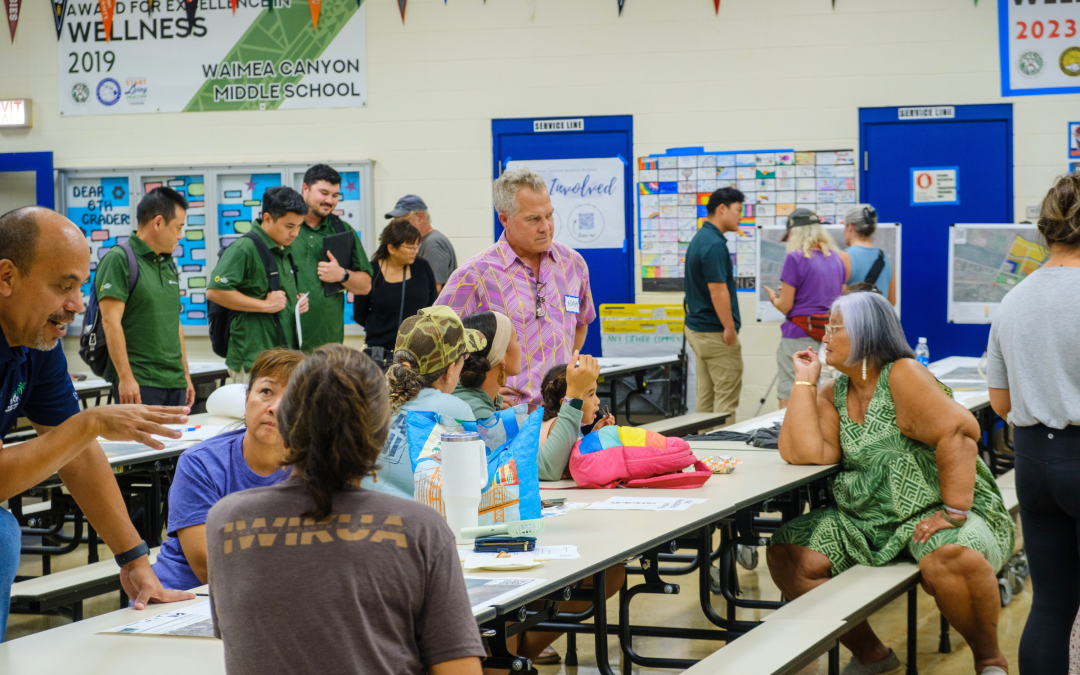
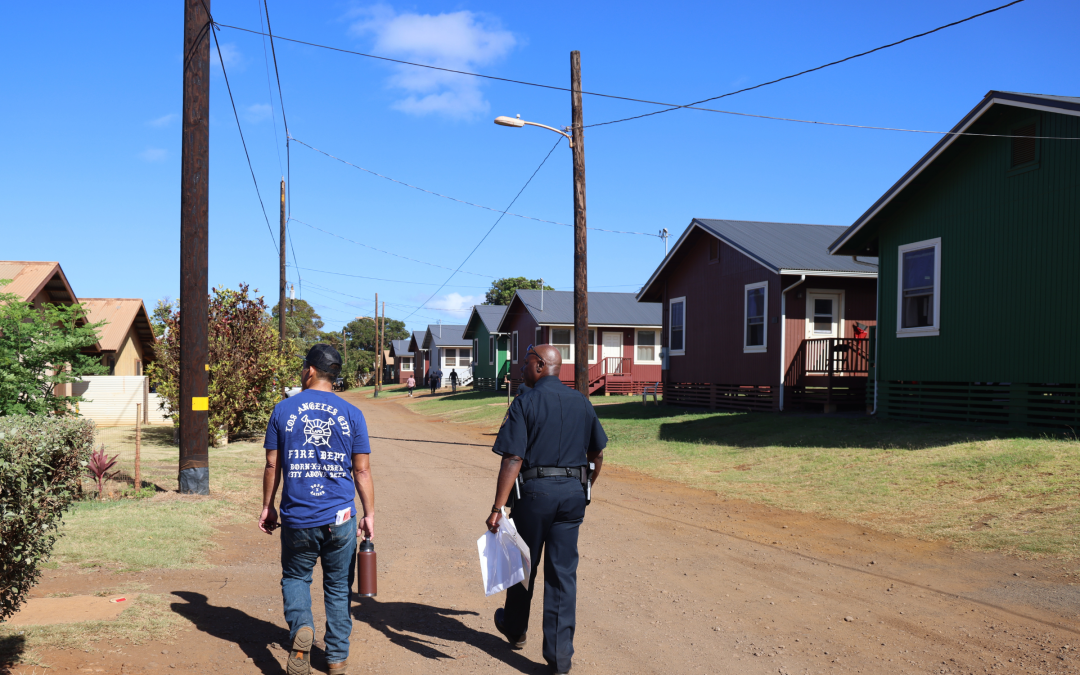
WAIKŌLOA VILLAGE – Rob Lee was in a pre-meeting called by a traffic management and evacuation consulting firm based in Texas. KLD Associates needed to tell the first responders from Hawaiʻi Islandʻs police and fire departments, civil defense, the mayorʻs office and other agencies, like Leeʻs state Department of Transportation, what was on their agenda for a community meeting planned for the next evening.
Rebecca Cohen, an evacuation expert from KLD Associates, was going to announce, at a banquet room at the Waikōloa Village Golf Course, the launch of an evacuation traffic study and ask residents to participate in a survey.
When Lee, a project manager with the state Department of Transportation, heard Cohenʻs plan, he saw a problem on the horizon and made a move to get ahead of the trouble that was sure to come. His 41 years of working on Hawaiʻi Island told him Cohen and her consulting team needed help.
“I was like, holy samoly!” said Lee. “I told [Cohen,] well, you guys better invite me [to speak] at the meeting because I know what [the Waikōloa Village residents] are going to ask.”
This community in South Kohala is grappling with a danger that most residents were unaware of when they bought homes in a place considered to be somewhat affordable for real estate on Hawaiʻi Island. Waikōloa Village is one of the places that the state of Hawaiʻi has an extreme risk of wildfire.
After the devastating Lahaina Wildfire that claimed the lives of 102 people in August 2023, residents of communities like Waikōloa Village better understand that their geography and infrastructure meant that they might face evacuation challenges similar to what happened on Maui: A place without enough time or safe routes to efficiently and effectively evacuate in the event of a wildfire.

Understanding the Risk
Waikōloa Village residents cite their communityʻs inclusion in the Hawaiʻi Attorney Generalʻs 2024 Lahaina Fire Incident Analysis Report as a reason to take action.
The report states: “Hawaiʻi has a very high risk of wildfire — higher than 88 percent of other U.S. states, Lahaina has a 98 percent higher risk than the rest of the country. Other parts of Hawaiʻi also have extreme risk, for example, Waikōloa Village on the island of Hawaiʻi has 100 percent higher risk than any other place in the U.S.”
Thereʻs one big difference between the communities, said Waikōloa Village resident Aislinn Chalker: “We don’t have an ocean and we are surrounded by invasive grasses.”
While Waikōloa Village shares a name with the coastal Waikōloa resort communities, Waikōloa Village is a 15-minute drive from the ocean. Jumping into the ocean, as many Lahaina fire survivors did, isnʻt an option for Waikōloa Village residents if a fire reaches their community.
Waikōloa Village is home to an estimated 10,000 people, which fluctuates with the seasons (the last official census in 2020 said the town had around 7,000 full-time residents.) The community, with its new housing developments and expanded shopping areas, is one of the fastest growing communities on Hawai’i Island.
Waikōloa Road, which cuts through pasture land and lava fields, is the only way in and out of the town by car. Itʻs an eight-minute drive makai to Queen Kaʻahumanu Highway and a 10-minute trip mauka to Māmalohoa Highway. Waikōloa Village residents are concerned that traffic might come to a standstill during an evacuation as it did in Lahaina.
Lee knew the residents of Waikōloa Village werenʻt going to be content with an announcement about a survey. What caught the consulting team by surprise was the communityʻs desire for whatʻs short-handedly called the second road.
“And sure enough, everybody was like, they could care less about the survey because they already want the second road, the second road, the second road,” said Lee.
Cohen, who often works in California communities facing wildfire threats, was very surprised, but she heard the concern.
“So I heard their need,” said Cohen. “And when I listened more, it appears their concerns are more than just from an evacuation perspective.”
Lee was prepared to step in with a message for the crowd that would help ameliorate the situation.
“Everybody kept hammering the number two road, the number two road. And I understand everybody’s emotional,” said Lee. “I can understand where they’re coming from, but the county was trying to do something, which is better than doing nothing, which is great.

The Village is A Gigantic Cul-de-Sac
Waikōloa Village was first developed in the 1970s by Boise Cascade – the lumber company – as a golf retirement community. Before the construction of Waikōloa Village there weren’t significant populations that lived in the area. The area is hot, arid and often very windy, conditions that are ideal for wildfire.
The feared wildfire would come mauka from the slopes of Mauna Kea. High winds would drive the flames quickly across the grassland leaving residents with little time to escape toward the ocean on Waikōloa Road. Going up toward Mamalohoa Highway would likely be driving into the flames. That means going down Waikōloa Road to Queen Kaʻahumanu Highway is the only full-time way out.
Chalker, who grew up on Oʻahu, says a significant problem for Waikōloa Village is that many people who moved into the community didnʻt understand the wildfire risk when they moved into Waikōloa Village 10 years ago.
“Imagine working your whole life and then using your retirement money and buying a now one million dollar home and then finding out you’re in the highest wildfire risk area on the island,” Chalker said. “And I mean us too, my husband and I, we bought this house and we were so excited we could afford our first home.”
Chalker said she had no awareness of the fire threat the first six years she lived in Waikōloa Village. “And then we started having a couple of fires up mauka and we started to really think about it. Then we evacuated [during the Mana Road fire] and we thought, oh my God, nobody ever told us about it. We never thought about this.”
The Mana Road fire started along Old Saddle Road in July 2021 and eventually burned 40,000 acres not far from Waikōloa Village.
On Hawaiʻi Island during a real estate transaction, there are disclosures required about lava flow zones (Waikōloa Village is in the zone with the second-lowest risk.) However, there arenʻt similar disclosures for wildfire.
“We actually tried to engage the Hawaii Realtors Association to see what we could do to get disclosures put in when people buy just to say this is a high wildfire risk area,” said Chalker. The effort was unsuccessful.
Chalkerʻs family has prepared a go-bag: “We’re ready to go right now if we had to.”
But knowing when to go is a concern for Waikōloa Village residents. After all, the sirens didnʻt sound in Lahaina. Would the call to leave come in time?
Another complication is a tactic that Hawaiian Electric adopted in the wake of Lahaina: the power safety power shutoff (PSPS). Shutting off power lowers the risk of power lines or other company equipment sparking fires. However, it also can cut power to information sources people follow to help them make decisions on whether and when to evacuate.
However, for many residents, the answer to the wildfire problem was frustratingly obvious: Waikōloa Village needs a second full-time road in-and-out of the community.
“I understand and I feel for them, and I don’t disagree with their statement, but again, my perspective is exclusively for evacuation purposes,” said Cohen. “And it sounded to me like DOT [and Rob Lee] was responding to that need at the very least.”
Creating Another Way Out
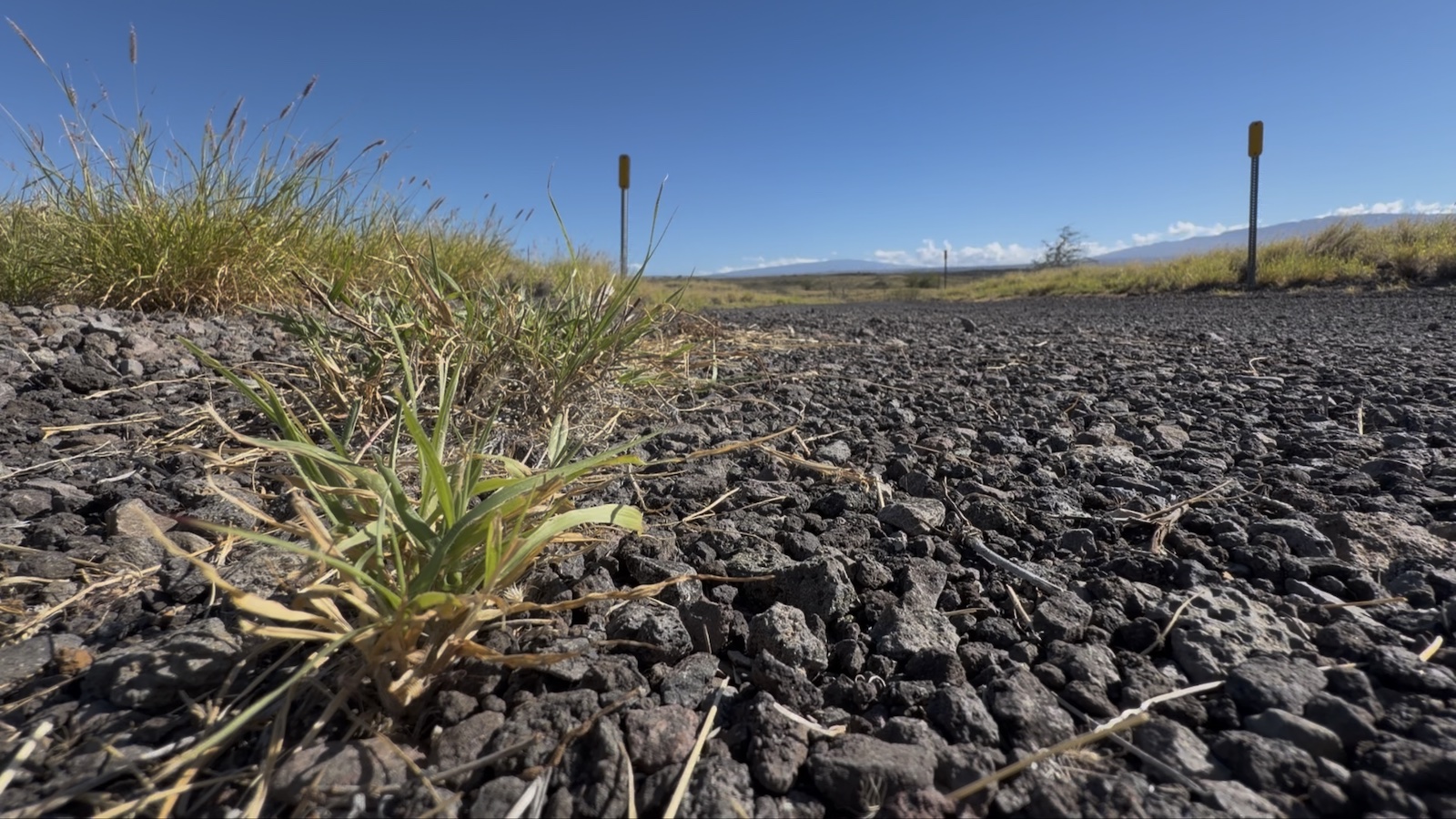
There is already more than one way out of Waikōloa Village. Thereʻs an emergency road that runs roughly parallel to Waikōloa Road.
The Hulu Street Road is very lightly paved, is curvy, and has steep sections. Itʻs intended for evacuees to escape toward the ocean. The escape route leads to a gate not far from the South Kohala Fire Station. There is no possibility of emergency vehicles driving up Hulu Street from the coast because the road is too steep to climb. Emergency vehicles are expected to travel up Waikōloa Road.
Chalker is one of many residents frustrated that the state and the county arenʻt developing a second road and are instead relying on private developers to build infrastructure for the community.
After Lahaina, Chalker helped create a non-profit, Wildfire Safety Advocates of Waikōloa, and the group distributes t-shirts and bumperstickers reading “Second Road for Waikōloa.” Her nonprofit’s website has a drone video following vehicles down the emergency evacuation road.
“It was important to me hearing from the community that we have public financing behind roads, and that if we are growing a community with county housing, that we also have a responsibility to be at the table to provide that infrastructure,” Hustace said.
A proper second road is thought to cost at least 25 million dollars. The price tag is a limitation along with acquiring the land to build a permanent second road.
Hawaiʻi county council already set aside 2.5 million dollars for the planning design of a second road. Council member James Hustace, who represents communities in North and South Kohala which includes Waikōloa Village, sponsored the action. At the community meeting announcing the evacuation study, Hustace spoke about the importance of being prepared for the continuing growth of Waikōloa Village.
“It was important to me hearing from the community that we have public financing behind roads, and that if we are growing a community with county housing, that we also have a responsibility to be at the table to provide that infrastructure,” Hustace said.
A proper second road is thought to cost at least 25 million dollars. The price tag is a limitation along with acquiring the land to build a permanent second road.
A Quicker Solution with a Lower Price Tag
Leeʻs message was there is a second emergency road coming and it might be ready by early summer.
While there isnʻt a second full-time road planned, Lee and the state Department of Transportation have collaborated with five private landowners to create another lightly paved road that will exit out onto Queen Kaʻahumanu Highway near the Puako Beach Road. Lee said the emergency road should be finished by September and cost 3.75 million dollars.
Lee said the cooperation of the landowners is crucial to the second emergency road being created. Lee said the road, which will exit at the northern part of the community near Kamakoa Nui Street next to a new planned development called Nānā Kai, will be straighter and less undulating than Hulu Street.
By the end of the summer there should be three ways out of Waikōloa Village in case of a wildfire. Lee expects that after the DOT finishes the road, it will be turned over to the Hawaiʻi County Civil Defense. For Lee, the second emergency road he is working on should also alleviate a bit more anxiety when itʻs completed.
“Everybody forgets about what the Mana Road fire was like and what the Waikōloa fires are like, because they don’t live here,” said Lee. “We had more fires that everybody else had in the entire state [on Aug. 8, 2023,] but unfortunately Lahaina one was fast and was deadly. We don’t want that happening to our Big Island residents.”
What Can Individuals Do to Limit Their Risk?
In the meantime, wildfire prevention advocacy groups are very active in Waikōloa Village encouraging people to take steps to minimize the risk of losing a home to fire. The Hawaiʻi Wildfire Management Organization says an important step is creating a five-foot buffer around houses thatʻs clear of flammable debris.
“What makes or breaks your home is what you have done or not done around that from your outside wall to five feet out,” said Elizabeth Pickett of HWMO. “And that is very empowering,”
So is a third way out enough for residents like Chalker?
“At this point, the anxiety of it is too much for our family,” she said. “We’ve decided to move. And a major consideration for where we’re looking is what is the fire risk.”
To Lee and Cohen, when it comes to the objective of effectively evacuating Waikōloa Village, the short-term 3.75 million solution available in months, is better than the 25 million dollar solution available in years.
“Honestly, I’m confident that what we provide the community, and really the county, will be very useful, and there is a good chance that our findings will support what they’re looking to do,” said Cohen.