Cooperative Extension

Hawai‘i Farmers Union United
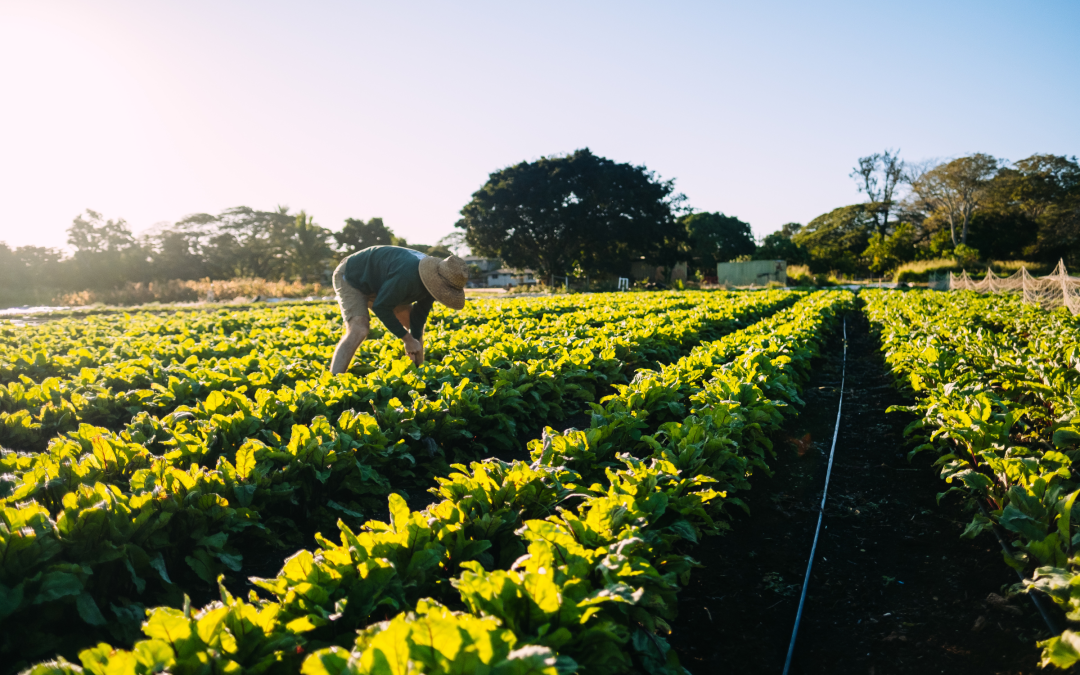
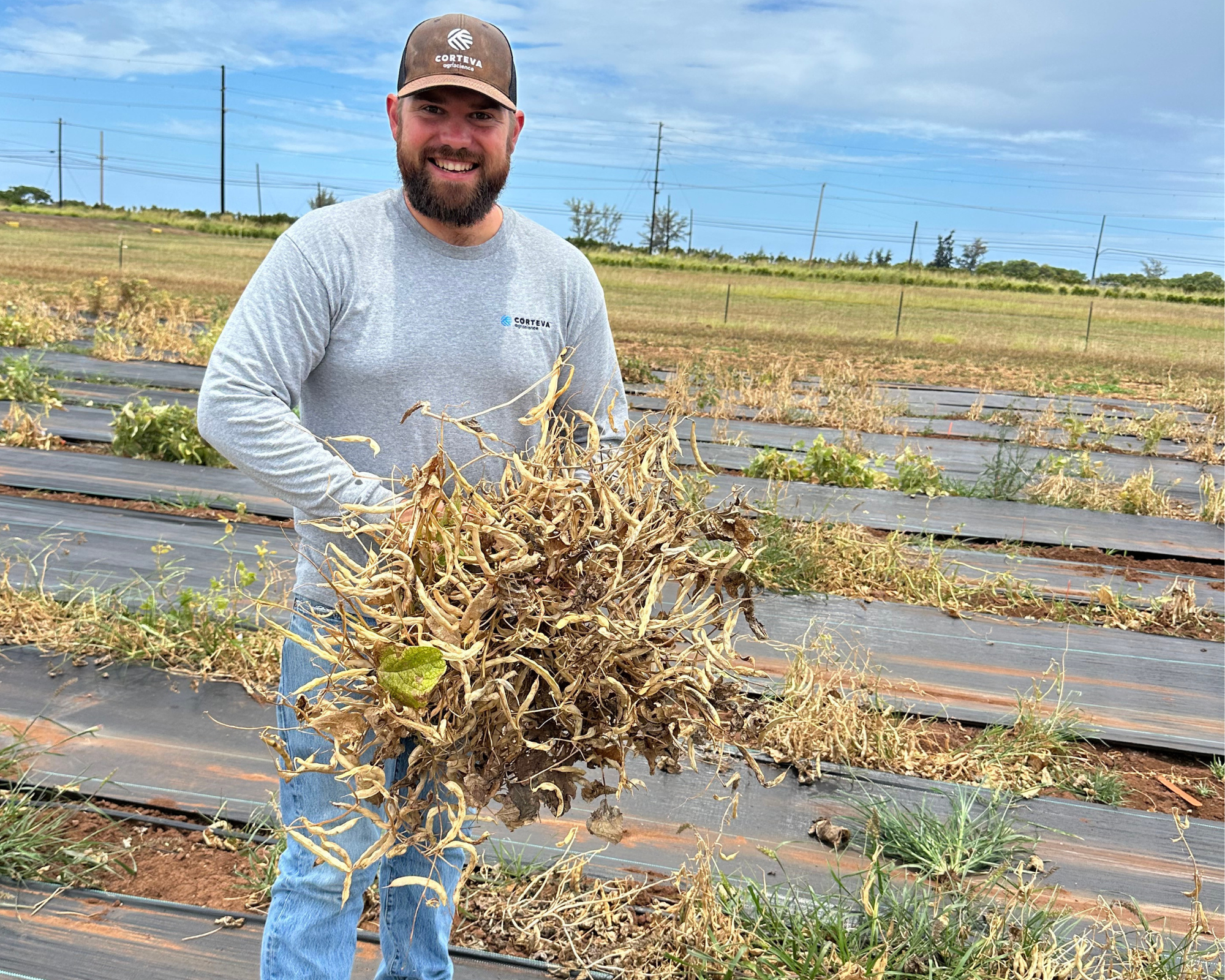
It’s one of several test sites where Amjad Ahmad, an extension agent with the University of Hawai‘i, is evaluating dried bean genotypes to identify which ones grow best in specific parts of the islands.
Growing those crops has been uncommon in Hawai‘i since many can easily be imported and sold at low prices, so he’s focusing on varieties that have potential as value-added snacks.
“There are so many that grow really well here in Hawai‘i,” he said. “They yield well, too. Imagine labeling them value-added, grown and made in Hawai‘i, that’d definitely give it additional value and would be profitable for our farmers.”
Ahmad is one of about 30 extension agents with the College of Tropical Agriculture and Human Resilience’s Cooperative Extension. In addition to evaluating potential new crops, extension agents also test out different agronomy and post-harvest strategies; help farmers and gardeners troubleshoot issues; and provide education.
“Extension agents are kind of like the boots on the ground people that articulate and respond to important needs and issues to support local agriculture and agricultural professionals and community members,” said Hannah Lutgen, an ornamental plants extension agent on Maui.

What is Cooperative Extension?
Cooperative Extension programs were created by the Smith-Lever Act of 1914 and are now found in every state, the District of Columbia, five territories and Micronesia.
UH’s Cooperative Extension today has 32 extension agents, 25 agricultural specialists and 37 other support staff around the state, though their roles often overlap.
“We are a team that is lean and adaptable, so everyone is kind of taking on all the roles to meet the needs of Hawai’i,” said Jeremy Elliott-Engel, who at the time of our interview served as the associate dean and associate director for CTAHR’s Cooperative Extension. (Elliott-Engel is no longer with UH Mānoa.)
The team provides education to local farmers, ranchers, community members, youth and families. Some of their programs include 4-H youth development, GoFarm beginner farmer training, Master Gardener education, Local and Immigrant Farmer Education and Supplemental Nutrition Assistance Program education.
Cooperative Extension is also contracted by the state Department of Hawaiian Home Lands to provide education and technical assistance to lessees. Moloka‘i’s and Hawai‘i Island’s homesteads have had an extension agent for over 30 years, while the Maui homestead has had one since 2023.
Elliott-Engel said the team directly serves about 2,000 agricultural producers a year. Extension agents are important partners to Hawai‘i’s agricultural industry because they conduct research—often with other university staff—based off the community’s needs.
“You can do amazing basic science, but if you’re not also situated with the connection to real world, practical problems, then you miss how and why you would use that innovation,” he said.
Essential Research for Local Farmers
One example is Maui extension agent Rosemary Gutierrez-Coarite’s yearly onion thrips trial. Thrips are a major threat to onion crops globally and easily become resistant to pesticides, so her yearly trial identifies the best pesticides to use.
“Every year, producers in Maui are waiting to see what is the answer,” Elliott-Engel said. “That’s not going to get published in Nature (the multidisciplinary science journal), but it is absolutely fundamental for Maui onions to be successful and to be sellable.”

O‘ahu extension agent Joshua Silva talks about soil health and an on-farm mulching trial during a HFUU Wai‘anae chapter meeting. HFUU and Cooperative Extension are also working together to increase the number of organic certified farmers in Hawai‘i. | Courtesy: Christian Zuckerman
Some ongoing extension research projects include screening cacao varieties for disease tolerance to help Hawai‘i’s growing cacao industry, cultivating cut foliage eucalyptus since eucalyptus and other myrtle plants can no longer be imported into the state, and helping Camellia sinensis, or “true tea,” farmers expand their production.
Ahmad’s bean trials stemmed from Maui businesses asking the Hawai‘i Department of Agriculture (HDOA) for help to bring more legumes to the islands. HDOA then reached out to him.
In 2016, the United Nations General Assembly highlighted legumes—also known as pulses—as critical to global food and nutritional security. Most legumes are good sources of protein, and many types contribute nitrogen to the soil and can grow in areas where water and fertilizer are limited. That means lower startup costs for farmers to grow this crop.
“Land is precious in Hawai’i, and if we can put something that’s healthy and will get the farmers more money and will benefit to the community, why not?” said Ahmad, who specializes in sustainable and organic agriculture.


He added that it’s important to continue researching different crops that may grow well here as new insects, diseases and climate change impact what food can be grown here.
“A variety that was thriving well 20 years ago, 10 years ago may not right now because of pests, maybe weather, amount of rainfall,” he said. “The key to diversified ag is always to look into ‘Ok, there could be something better that’s developed somewhere on the Earth. Can I take advantage of it?’ ”
Extension projects that evaluate new crops and crop varieties can save farmers a lot of time and money, said Christian Zuckerman of Ridgeline Farms and president of the Hawai‘i Farmers Union United Wai‘anae chapter. He added that some projects have even brought in equipment to test in different conditions. That helps farmers see if the investment is worth it before making the purchase.

Agricultural Problem Solvers
A major part of an extension agent’s role is to help farmers troubleshoot issues. Pests, diseases, soil health and plant nutrition are some of the most common topics that farmers ask for help with.
“I didn’t have that technical background when I came to farming, so it’s really nice having CTAHR and the extension agents there to support and answer questions when those things come up,” Zuckerman said.
Lutgen led a pest and pathogen study that identified over 30 fungi and one parasitic nematode (a type of microscopic roundworm that infects plant roots) associated with protea. Further testing is still needed to determine whether the fungi are a disease, but the team created a pest and disease management program and shared their findings with the protea grower community.
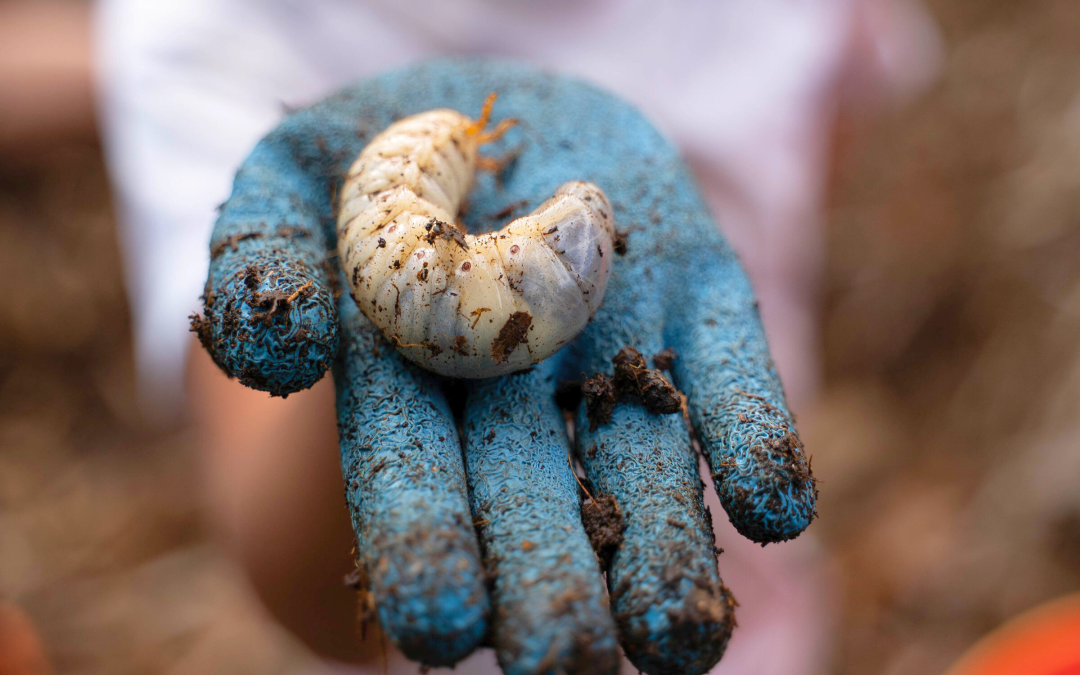
On Kaua‘i, extension agent Emilie Kirk said she’s often asked about the Coconut Rhinoceros Beetle, an invasive pest that primarily targets palm trees but can also go after hala, kō and other plants. She’ll do farm visits to confirm if tree damage is indeed caused by the beetle and demonstrate some green waste management and tree netting practices.
However, she said, sometimes, there’s not much that she can do directly when it comes to invasive species. Rose-ring parakeets have been on Kaua‘i since the 1960s and especially plague orchards. While farmers can net their trees, it’s a very labor-intensive practice.
“Sometimes, you just have to look and say, ‘I’m sorry, that’s awful. Let me see if I can try to find you some resources,’ ” she said.
A Focus on Education
In Moloka‘i’s Ho‘olehua homestead, Christina Aki raises pigs and chickens and grows kalo, banana, papaya, māmaki, ‘olena, ginger and other crops for her family and neighbors. Her foray into growing food began about seven years ago when she took a workshop led by Moloka‘i extension staff.
Since then, she’s attended many more extension workshops and recently graduated from the Hawai‘i Farmers Union United’s six-month-long Farmer Apprentice Mentoring Program. She hopes to one day sell the food she grows and credits the Moloka‘i extension team for sparking her interest in farming.
“If they weren’t there, there wouldn’t be anything, and I wouldn’t have that lightbulb shining where I’m willing to try,” she said.

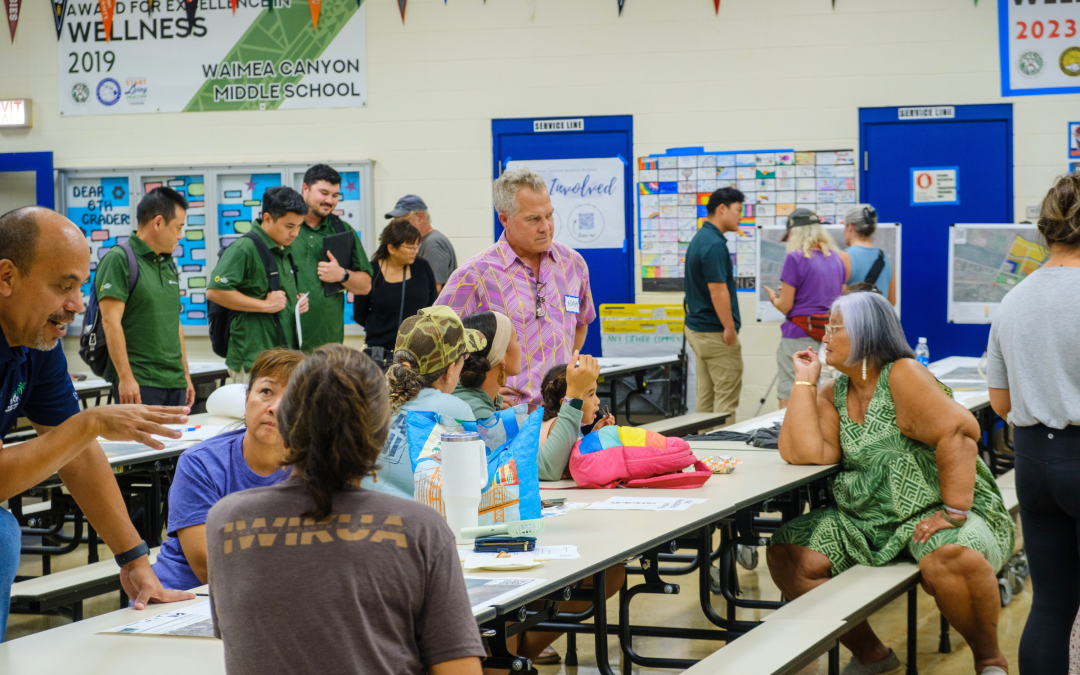
In the spring, HFUU’s Wai‘anae chapter held a meeting at Zuckerman’s Ridgeline Farms with O‘ahu extension agent Joshua Silva, who talked about soil health and weed management practices. The topic stemmed in part from Silva’s mulch trial at Zuckerman’s farm.
“It’s much easier to have a farmer implement a practice if they see it being done and are watching it day to day,” Zuckerman said, adding that he hopes to see more extension research collaborate with the farming community.
Capacity for Serving Local Ag
One of Cooperative Extension’s challenges is that the number of researchers and other positions supporting the extension agents have decreased over the decades. Elliott-Engel said there were 28 full-time agricultural specialist positions at its experiment stations in 1990. Today, there are only nine.
Likewise, the number of agricultural technicians that have run the office’s farms have decreased from 82 in 1990 to 26 today. These numbers, he said, underscore the “vital importance of continued investments from the state Legislature.”
In 2024, the Legislature provided five extension agent positions to fill expertise gaps—ranging from livestock, food safety, water quality and urban horticulture—created by retirements and a subsequent loss of positions.
This past session, the Legislature funded a new permanent extension agent position in Kona, as well as eight agricultural technician, four community coordinator and eight other technical staff positions. The Legislature also allocated $10 million for the Waimānalo and Magoon research stations, where new facilities will be built.
“Their efforts are crucial in addressing staffing challenges and reducing the multiple roles often shouldered by extension agents,” Elliott-Engel said. “They reflect a commitment to strengthening our capacity to serve Hawaiʻi’s community and agricultural sectors.”
Cooperative Extension also receives funding from the federal government and contracts. Eight of its extension agent positions are funded all or in part by grants or contracts. Most of the team’s support staff are also funded by grants and contracts. Elliott-Engel said while most of the program has so far remained stable despite federal funding cuts and freezes, its SNAP-Ed program will end Sept. 30 if Congress doesn’t restore its funding.
He added that most new extension positions have been filled by local residents, including several Native Hawaiians, and Cooperative Extension hopes to enhance its support around the policy and business sides of agricultural production. That includes things like helping farmers figure how much of a crop they need to grow to break even and how Hawai‘i can improve access to markets and water infrastructure.
Kirk, who also runs extension’s Local and Immigrant Farmer Education program, said a heavy focus on relationships makes the partnership between the extension team and local farming community work well. She speaks Thai and works closely with Kaua‘i’s Thai farmer community.
“I think that it helps that even if there is sometimes heavy history or misgivings with the university itself, that extension has a very good reputation in the community, especially among the farmers, as being people who are really here to help,” she said. “So that’s been awesome, just showing up, listening and building those relationships.”
Correction: A previous version of this story misstated the length of time Hawai‘i Island’s homestead community has had an extension agent; this mistake has since been corrected.