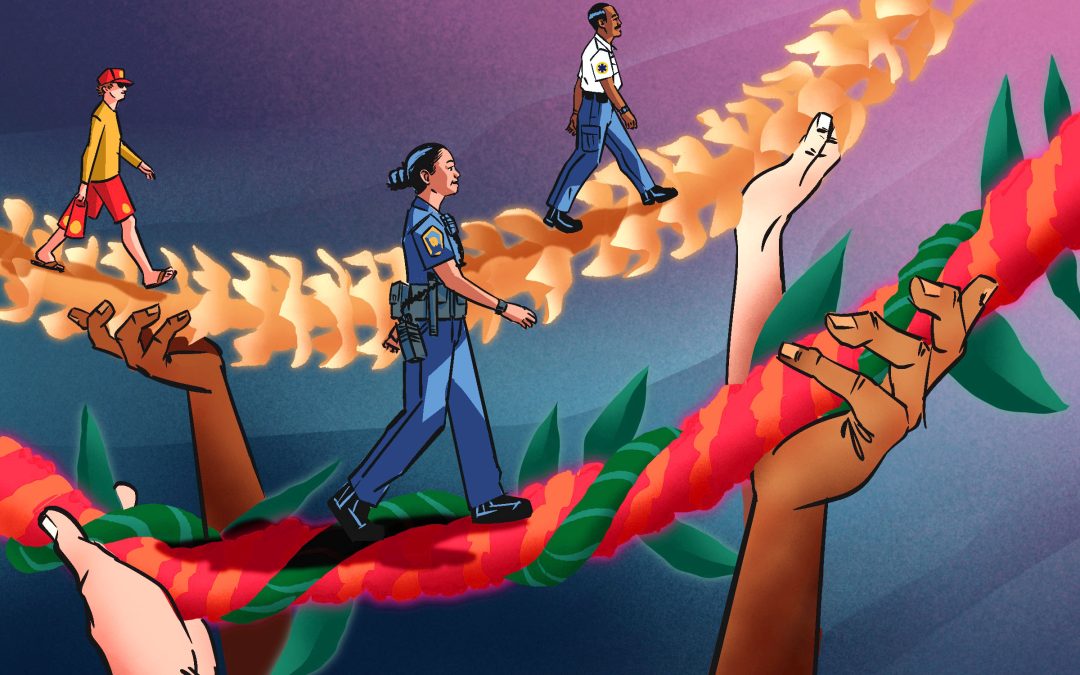
Hawai‘i Cares 988
Hawai‘i CARES 988’s locally based staff provide supportive counseling, screening for urgent or emergent mental health or substance use needs, and recommendations for behavioral health assessments and services and crisis intervention. Calls are confidential and free. The call center partners with the National Suicide Prevention Line, which provides tele-interpreter services in over 150 languages.
Ancient Valley Growers
A 25-acre farm in Pahala on Hawai‘i Island. The farm grows vegetable and māmaki and raises chickens and cows.

University of Hawai‘i's Seeds of Wellbeing
A federally funded project that aims to understand and advocate for the health and wellbeing of farmers, ranchers and allied agricultural producers in Hawai’i, and provide tools and skills for stress management.

National Rural Health Association
A national nonprofit membership organization that aims to provide leadership on rural health issues through advocacy, communications, education and research.

College of Tropical Agriculture and Human Resilience
A college at UH Mānoa that creates and delivers knowledge that supports and strengthens families, agricultural and food systems, and the natural environment.
Department of Family and Consumer Sciences
A department within UH’s College of Tropical Agriculture and Human Resilience that houses the B.S. in Human Development and Family Studies and B.S. in Fashion Design and Merchandising programs. It also fosters Cooperative Extension Service programs, including 4-H, Community Education and Leadership, Agricultural Leadership, and Intergenerational programs, and it works in collaboration with the Center on the Family.

Mental Health America of Hawai‘i
An affiliate of Mental Health America that aims to promote mental health and wellness through education, advocacy, service, and access to care.

Hawai‘i Farmers Union United
A grassroots producer-driven organization made up of 16 local chapters on six islands. The organization aims to advocate for and create vibrant and prosperous agricultural communities.
Adaptations Inc.
Adaptations Inc. is a certified organic farm established in 1979 and regional Food Hub incorporated in 1993 in Kona.
Editor’s Note: This article mentions anxiety, depression and suicide. If you or someone you know may be experiencing a mental health crisis or has thoughts of suicide, contact the 24/7 Hawaii CARES 988 call center by calling or texting 988.
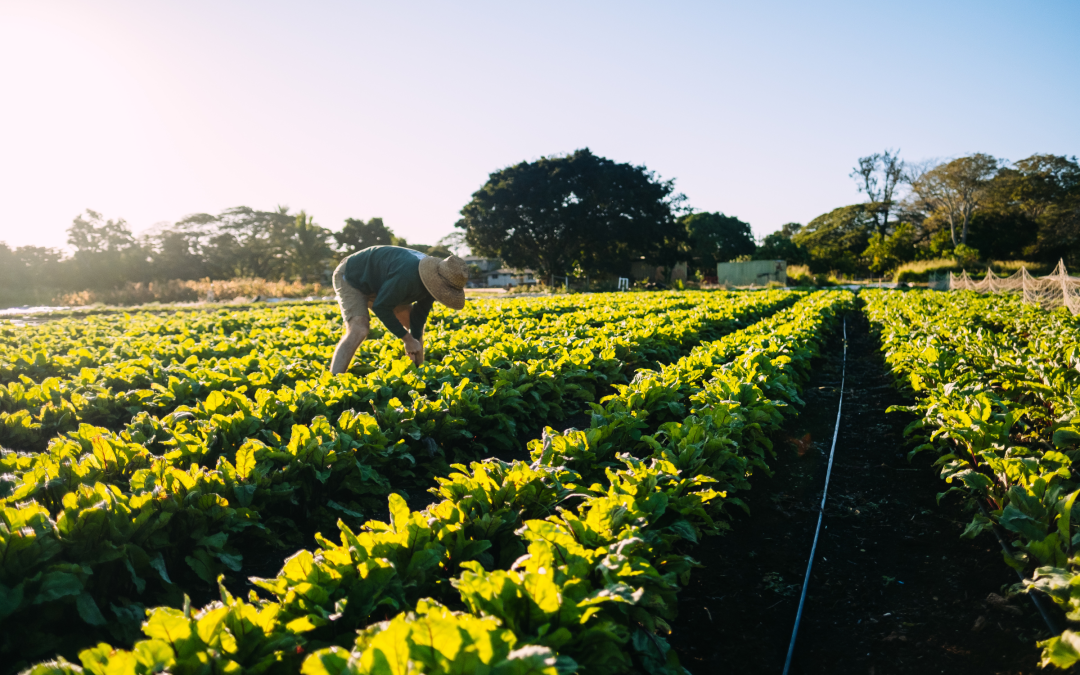
Andrea Drayer has been farming in Ka‘ū for the last four years and saw fellow farmers struggle with stress as they tried to keep on top of planting, harvesting and selling their crops—often all by themselves.
But she didn’t know how to approach others who were going through hard times emotionally or feeling burnt out, especially when they were talking about suicide.
“Farmers, we are really stubborn and, sometimes, we are not even one to accept that we’re going through a hard time,” said Drayer, founder of Ancient Valley Growers, a 25-acre farm.
She signed up to become part of the University of Hawai‘i’s Seeds of Wellbeing (SOW) project and is now part of a statewide group of about 80 farmers, food hub staff and ag support professionals who were trained in stress management and coping strategies, mental health awareness and first aid, and suicide prevention.
Their role is to destigmatize mental health in Hawai‘i’s farming community, provide emotional support, share resources and bridge them to mental health professionals. The idea is simple: By creating a supportive and informed peer community, Hawai‘i can help its agricultural producers better cope with stress and intervene before they experience severe depression or suicidal thoughts.
“Connection is one of the biggest protective factors when you’re going through a lot of challenges because we’re all very much about relationships,” said Thao Le, SOW project director.
Nationally, farmers are 3.5 times more likely to die by suicide than the general population, according to the National Rural Health Association. SOW’s research found that 51% of Hawai‘i’s farmers are stressed, 35% have experienced mild or severe depression, and close to 8% have had suicidal thoughts.
“For farmers in particular, as opposed to other occupations, it’s not a dedicated paycheck that you get, and it’s so tied to so many factors that are outside one’s control—the weather, policies like tariffs, pests, invasive species, consumer demand,” said Le, who is also chair of the College of Tropical Agriculture and Human Resilience’s Department of Family and Consumer Sciences at UH.
Seeds of Wellbeing received Mental Health America of Hawai‘i’s Outstanding Community Mental Health Leader award in May 2024. The project was supposed to be funded through the end of this year, but its federal funding has been paused. Le had wanted to train another cohort of peer mentors and develop further mental health resources.
Those involved with SOW said the project has helped increase awareness of mental health challenges in Hawai‘i’s farming communities, alongside wider availability of online therapy and heightened attention of mental health in general brought on by COVID-19 and the August 2023 Maui wildfires.
“Seeds of Wellbeing has been such a crucial program for a lot of people to even understand: what do you do with a friend that is expressing these needs from their community and how we can reach out and help them?” said Ashley Hogue, a Maui farmer and SOW peer mentor.

Andrea Drayer, founder of Ancient Valley Growers on Hawai‘i Island, joined UH’s Seeds of Wellbeing project to learn how she could better support Ka‘ū farmers who were going through hard times and displaying signs of stress, anxiety and depression. | Courtesy: Ancient Valley Growers
Seeding Awareness in Hawai‘i’s Agricultural Industry
Seeds of Wellbeing is part of a national effort to address farmer mental health. Researchers have studied the topic since the 1980s—when a severe economic downturn devastated the country’s agricultural communities and led to a significant increase in farm worker suicides.
Le said most of the studies conducted on the continent have been in rural, Midwestern, predominantly White communities. In Hawai‘i, about 24% of agricultural producers identify as Asian, 8% as Native Hawaiian or Pacific Islander, 7% as Native Hawaiian only, 53% as White, and 14% as biracial, according to the U.S. Department of Agriculture’s latest agricultural census in 2022.
Seeds of Wellbeing surveyed 408 agricultural producers statewide on their mental health needs. Respondents’ biggest worry was uncertainty, followed by COVID-19, production concerns (such as their ability to sell their crops, crop yields and production costs) and finances (such as loss of income, debt and cash flow).
Nearly 50% of farmers under 46 said they’ve suffered from depression, and about 14% with suicidal thoughts. That may be because the younger generation is more open about their mental health challenges, Le and her study co-authors wrote in a June 2023 Journal of Agromedicine article.
Farmers of East Asian and Southeast Asian descent also reported higher rates of depression and suicidal thoughts. Immigration status, shame of financial failure and stigma around disclosing mental health concerns may contribute to stress, anxiety and depression.
In addition, the study found that few agricultural producers reported seeking out professional assistance unless they were already dealing with moderate to severe depression or have suicidal thoughts. Instead, they were more likely to reach out to family and friends for help.
“The peer relationships and in the relationship in your families and in your little circle, that makes a huge difference in whether you have these good habits or you don’t have good habits,” Le said.
She likens the approach to caring for a plant. Other mental health strategies, such as therapy, aim to directly address and repair trauma—they pull out the weeds that are overwhelming a plant. But SOW’s peer mentor model aims to make the plant strong so that weeds can’t grow to begin with or overwhelm it.
Hogue, the Maui farmer, said that’s important when farmers face challenge after challenge. She herself has farmed in a variety of capacities, from being an intern to stewarding someone else’s land to trying to own her own farmland, and has had to move nine times in the last five years.
“It’s how you deal with the everyday things that are going to be thrown at you and how you can get through those challenges because they’re going to be there,” she said.

Some Seeds of Wellbeing peer mentors participated in the Ag Navigators program, where they underwent an additional two-day mental health training, performed farm visits and conducted well-being assessments of the farmers they visited. The ag navigators’ efforts showed that farmers had a high level of need around financial well-being and social connection. | Courtesy: Thao Le
Embracing Community
For a long time, mental health was a taboo topic in local agricultural communities, said Vincent Kimura, a SOW peer mentor and president of the Hawai‘i Farmers Union United’s (HFUU) Honolulu chapter. It was talked around, rather than about.
In 2019, HFUU piloted its “hive” tent at its convention to start conversations about mental health in the farming industry. The tent features an educational component, snacks, beverages, giveaways, and space for attendees to simply be present and connect. HFUU has continued to have its “hive” tent at its conventions, and SOW builds on those efforts. Many of HFUU’s leaders have become SOW peer mentors.
“A lot of us farmers just personally understand that grief, like I spoke to you personally, from my perspective moving nine times, going through that grief of trying to just grow food for our community and going through those ups and downs and challenges, was one reason why I personally joined,” said Hogue, who also serves as HFUU’s outreach director. “I personally wanted to learn how to address those issues.”
That was the case for Maureen Datta, a Hawai‘i Island farmer and HFUU secretary. She co-owns Adaptations, Inc., a regional food hub in Kealakekua. Many of the food hub’s 90 farmers are isolated, but with harvests delivered twice a week, she has an opportunity to check in and catch if they’re displaying signs of stress or other mental health concerns.
One farmer she helped was so anxious about a major surgery that she could barely function. Datta used her training as a SOW peer mentor to help the farmer accept the discomfort she was feeling before helping her move forward.
Seeds of Wellbeing teaches its peer mentors that mental wellbeing first aid consists of creating awareness of what’s happening in the mind, allowing feelings and thoughts to be as they are, and responding in a way that aligns with one’s core values.
On the other side of the island, Drayer, who also serves as president of HFUU’s Ka‘ū chapter, invited a farming family to spend a couple of nights at her farm, where she grows vegetables and raises cows and chickens. The family was going through a hard time and needed to sell their home, but being around the animals and talking with Drayer gave them a chance to ground themselves.
“I helped them to just to get out of like that what they’re going through and put a pause on their problems, and then come back with a fresh mind, and then maybe have a different perspective,” she said.
She and other peer mentors also give out SOW therapy vouchers so farmers can visit with professional providers who received agriculture-based mental health training. Each voucher is for three free sessions, and Le said the project has given out at least 40 vouchers.
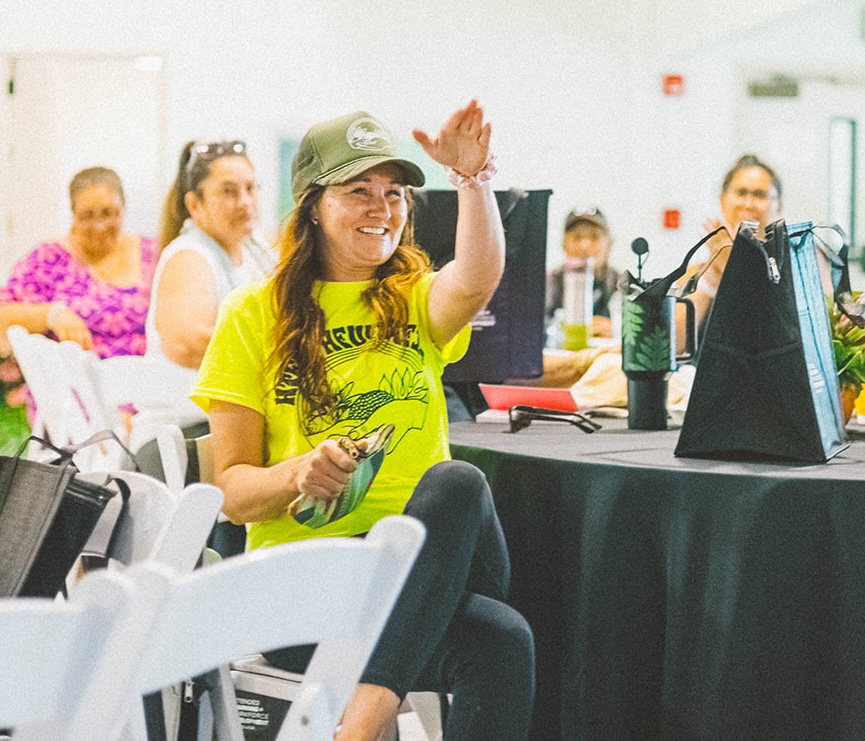
Maui farmer and SOW peer mentor Ashley Hogue said her biggest takeaway from participating in SOW’s peer mentor program is recognizing that her role is to help encourage farmers to get the professional support they need. | Credit: Angie Diaz Photography
Hogue said her biggest takeaway from participating in SOW’s peer mentor program is recognizing that her role is to help encourage farmers to get the professional support they need. She recently provided emotional support to a family who had been farming for generations and had been dealing with strained relationships with one another and financial woes for the last couple years. She offered them vouchers to see a professional therapist.
Le said SOW hasn’t tracked the full impacts of its peer mentor program, but it did collect some data around its Ag Navigators program, where nine of its peer mentors received additional training and visited farms.
Those navigators conducted 95 farm visits with 43 farmers during the first half of 2024, during which they conducted well-being assessments around each farmer’s life satisfaction, emotional health, financial health, physical health, social connection, diet/nutrition and sleep. The data showed that there was a generally high level of need around financial well-being and social connection.
Surveys from the ag navigators showed that the program helped the ag navigators improve their own abilities to manage stress and maintain emotional balance and better understand the challenge that farmers face and the importance of strong community connections.

Seeds of Wellbeing peer mentors were trained in stress management and coping strategies, suicide prevention, and mental health first aid. Peer mentors are located on Hawai‘i Island, Maui, Moloka‘i, O‘ahu and Kaua‘i. | Courtesy: Thao Le
Mental Health Support Still Needed
In addition to its peer mentorship program and study, SOW developed a podcast, “Mālama the Farmer” campaign, educational videos, mental health trainings and a mental health literacy guide for Hawai‘i’s agricultural communities.
Melveen Camba, an occupational nurse, uses SOW’s resources when working with farmers in Kunia. Many are immigrants from the Pacific Islands, Philippines and other parts of Asia and supporting their loved ones back home. She said she’s starting to see them open up more about their stresses and challenges, so she uses SOW’s resources on self-awareness and grounding exercises to help them.
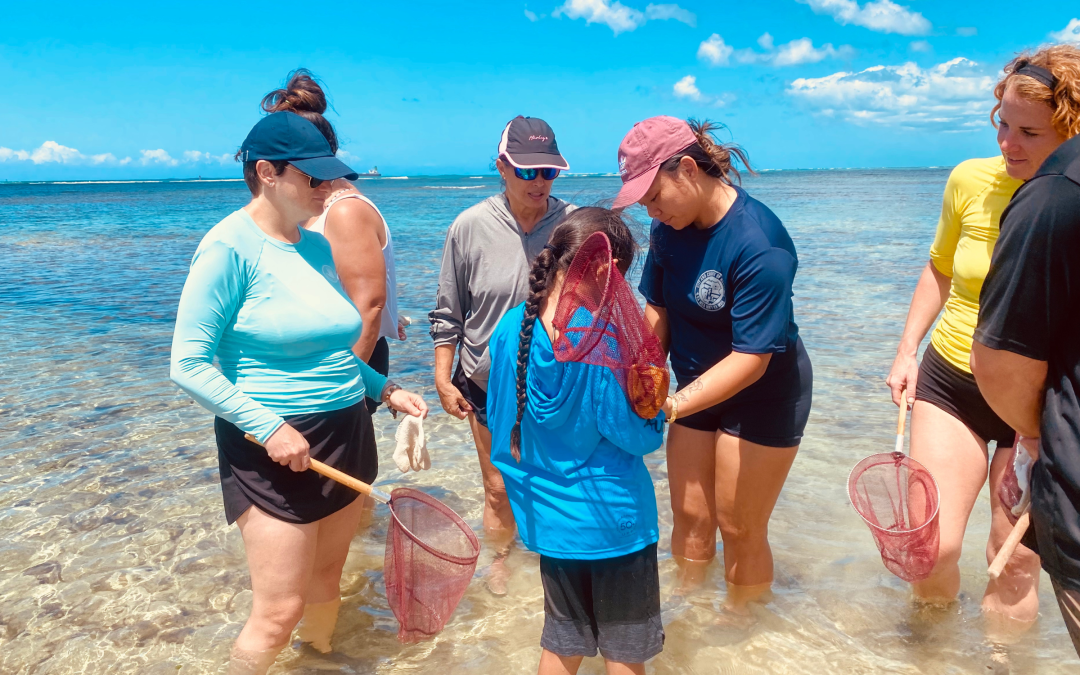
She’s also part of Le’s Culturally-Based Community Connections for Resilience project, which aims to reduce suicide among Hawai‘i’s essential workers. The project engages a cohort of 17 first responders and 17 farmers in ‘āina-based activities, like working in a lo‘i or at a fishpond. It builds on SOW’s peer mentor model to explore whether social support, plus connection with the land and cultural healing practices, can help participants’ mental health. That project also relies on federal funding, and Le is unsure of whether that funding will continue.
In the meantime, Le continues to host mental health trainings for SOW peer mentors when she can and still receives requests for SOW’s resources, like its “Cool Mind, Main Thing” stress management booklet for Hawai‘i farmers.
When we spoke at the end of April, she was preparing to send out 250 copies to organizations on O‘ahu, Hawai‘i Island and Maui. Maui County also released its 2025-2030 Food Nutrition Security Plan, citing as an action item “support agricultural producer mental health and building capacity for mental health resources.” Seeds of Wellbeing and HFUU’s Farm Apprentice Mentoring program were listed as leads for that action item.
Le said both are affirmations that mental health support is still needed for local agricultural producers. Datta, the Hawai‘i Island farmer and SOW peer mentor, said she and other farmers are worried about the uncertainty around the impacts of federal policies, funding freezes and funding cuts.
“The recent changes to ag supports, the tariffs being turned on and off, the economy being uncertain, it’s kind of triggering,” she said. “I mean there’s just so much uncertainty once again and it’s really just so unknown.”
And some said truly addressing farmers’ mental health requires tackling the systemic barriers that prevent the next generation from taking up farming and hinder current farmers from continuing to grow food. Alex Wong, a Kaua‘i farmer who helped with the Seeds of Wellbeing 2023 study, said farming has high startup costs, high risk and slow returns on investments, and many small farmers burn out while trying to become financially stable. He’s been advocating for state-subsidized healthcare as many small farmers he knows pay $200 to $500 out of pocket a month for their healthcare insurance.
Le said SOW’s study acknowledged that those structural and systemic issues are stressors for farmers, but SOW’s role is focused on peer connection and awareness.
Nonetheless, those involved with SOW are starting to see more recognition and destigmatization of mental health. SOW peer mentors even said they’re using what they learned to recognize warning signs and support friends and family, in addition to farmers. And Le said she’s hearing the broader community recognize that the weight of uncertainty and other pressures are taking a serious toll on farmers’ mental health.
“It’s heartwarming to know that we’re having that impact,” she said.
Mental Health Resources for Hawai‘i Farmers
- Hawaiʻi Ag Mental Health Mentorship Program: Local mentors that completed intensive training on stress management and coping strategies, suicide prevention, and mental health first aid. Peer mentors are located on Hawai‘i Island, Maui, Moloka‘i, O‘ahu and Kaua‘i.
- “Cool Mind, Main Thing: ABCʻs of Inner Well-being” – A Wellness Guide for Hawai‘i’s Agricultural Community. Developed by UH’s Seeds of Wellbeing and available in English, ʻŌlelo Hawaiʻi, Spanish, Ilocano, Laotian, Vietnamese, Mandarin and Thai.
- Seeds of Wellbeing’s resource hub, podcast and educational videos.
- Hawaii Poison Center: provides help for poisoning emergencies. Call 1-800-222-1222. Help is available 24 hours a day, seven days a week.
- Hawai’i Chapter of the National Alliance on Mental Illness: provides support, information and resources if you or a loved one is struggling with a mental health condition.
- Hawai’i Chapter of the American Foundation for Suicide Prevention: coordinates suicide prevention events and trainings, with emphasis on support for those who have lost a loved one to suicide.