Safe, stable shelter is the bedrock of healthy communities. Yet, Hawai‘i has faced a housing shortage for decades and it’s reached an alarming milestone as more Native Hawaiians now live on the continent than in their own homeland, and one in three local households have had someone consider moving out of state.
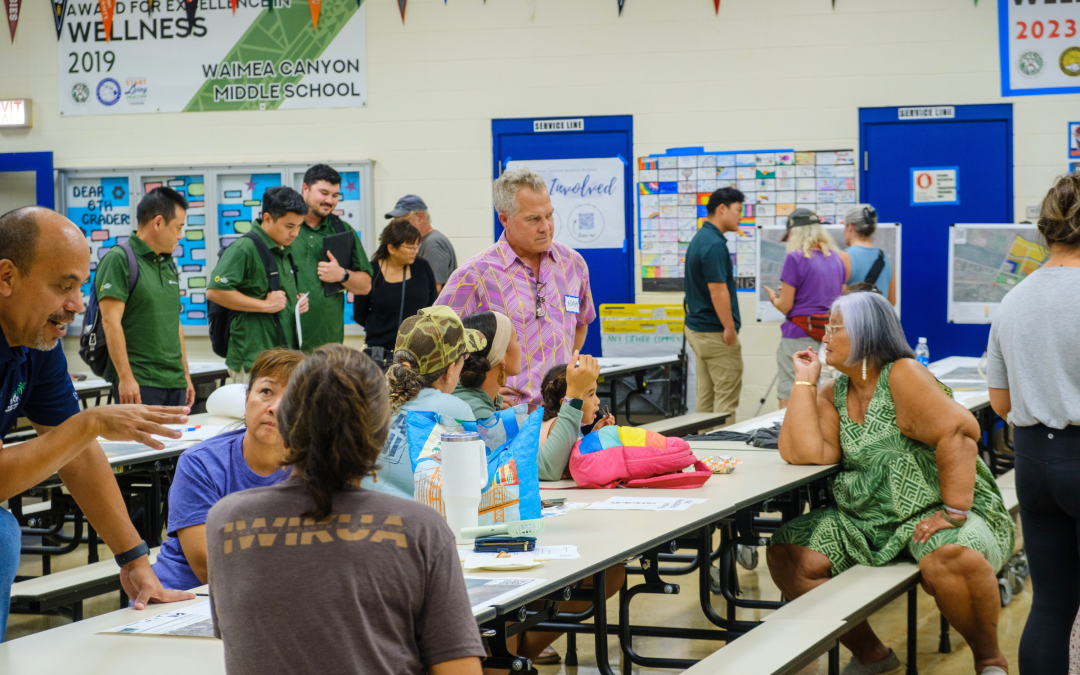
We want to know what’s being done to help locals stay in Hawai‘i while elevating the voices most impacted by the Islands’ housing challenges and paths forward. We’re not alone in this desire. We spent months asking community members about the issues they thought Overstory should focus on, and housing was one of the most cited topics.
Several residents talked about the ways their communities have changed as neighbors, family and friends leave for more affordable cities and newcomers come in. An O‘ahu resident described the bidding wars she saw for homes in her neighborhood during Covid. On Kaua‘i, we heard comments about how high property values and tax rates make it hard for local families to stay in areas where vacation rentals are prevalent. Some residents talked about the need for rent control—especially on Maui—and how all it takes is for one unexpected bill to cause individuals to lose everything.
Hawai‘i’s housing challenges are complex and can seem daunting given these comments and how our communities have changed in recent years. But some residents also told us they still have hope that they and their future generations will be able to stay here. One O‘ahu resident, for example, shared how she was able to purchase her home because the local seller wanted it to go to another local family, so they kept the price within reach. It’s individual actions like these that can make a difference.
We desperately need journalism and media that centers people and can serve people’s movements and regular folks to have a voice in the narrative.
We’ll be looking at how Hawai‘i can increase its housing supply, as well as land use and planning, houselessness, renter’s rights, tax policies, and the commodification of land and homes. Our goal is to present a fuller, richer picture of how we got to where we’re at today, what is keeping Hawai‘i from solving its housing challenges and what are the potential ways forward.
We’ll be embracing nuance and context because solving our housing shortage requires more thoughtful conversations and actions that move past longstanding and sometimes shallow narratives of renters vs. landlords and and housing vs. environmental protections.
We also hope to provide resources and explainers that can help demystify how our housing system works and the programs that are available. One Kaua‘i resident said that it’s common for existing housing articles to reinforce how difficult it is to afford to live here, but hearing about upcoming housing projects can help give people hope, even if the projects will take a while to open.
Until people understand all the complexities of what’s happening and why housing is the way it is, I don’t think the problem would ever get solved.
Much of our coverage will explore efforts to address our housing shortage. Some of these efforts may be ideas or in nascent stages here but have worked in other cities and states. In fact, some of our first housing stories will focus on models of community ownership, which shift power back to residents and decommodify housing. These models have been more common on the continent but show that there are ways to provide housing that locals can afford, despite ever-increasing property values.
We are committed to elevating the voices of those experiencing the struggles of the Islands’ housing shortage in a way that’s both respectful and meaningful to their lives. We don’t want to just check a box. We believe that valuable insights and solutions can come from a wide range of perspectives, and those closest to the problem often have unique contributions to offer. We hope our housing reporting encourages you to reflect on our shared humanity as people who call Hawai‘i home.
We welcome your thoughts, ideas and story suggestions. Feel free to email me at [email protected].
Funder disclosure:
This community listening project was supported by The Listening Post Collective.
A note on why we aren’t using community members’ names:
We normally grant anonymity for specific circumstances (you can read our policy here), but we made an exception for this community listening project. Our focus was on building relationships and getting to know people and communities, rather than reporting. We’ll be aggregating the information we collected and sharing back key themes.