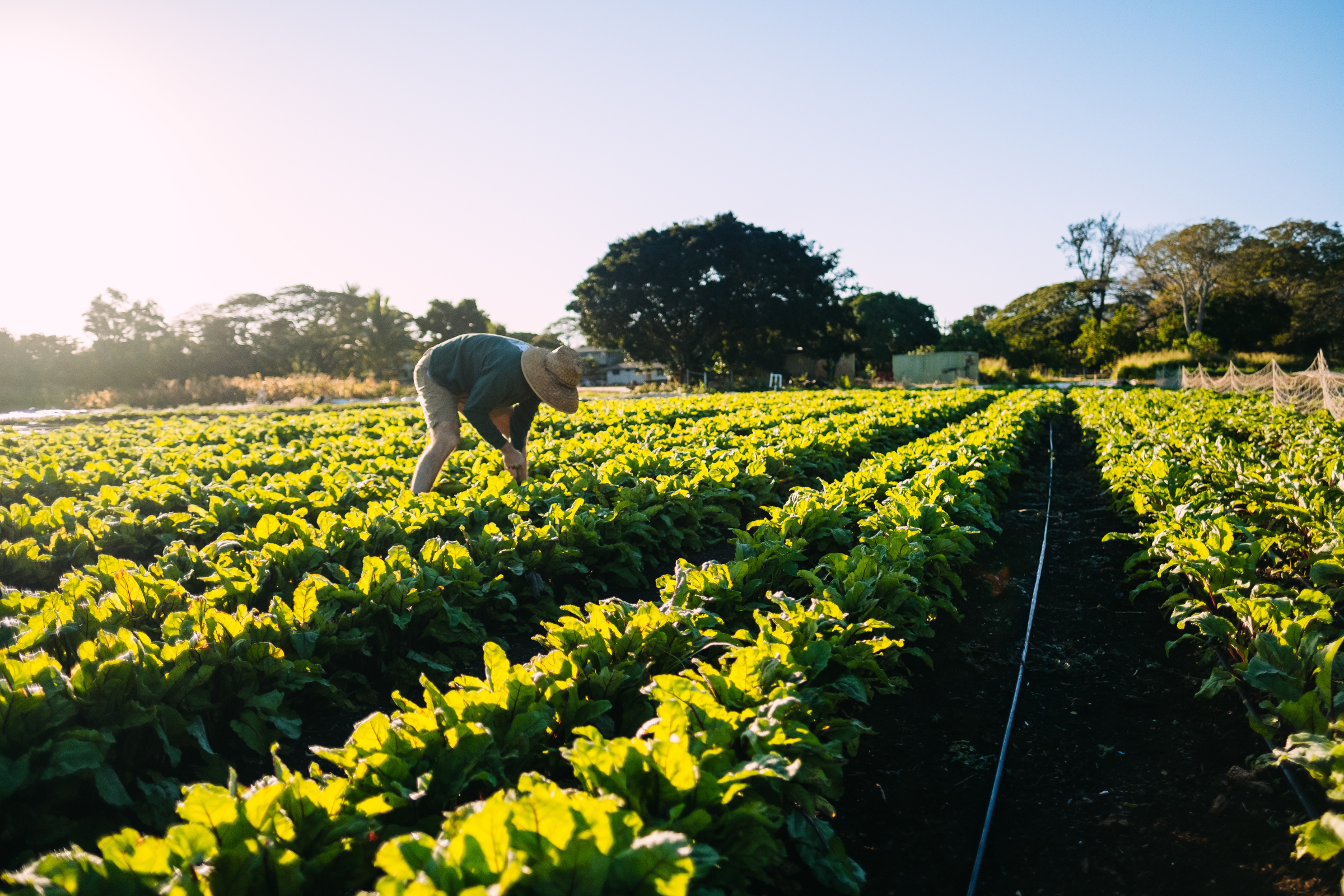
The sound of squealing pigs reverberates as Daniel Anthony points to a variety of verdant crops around his Windward O‘ahu farm, from kukui nut to milo, avocado, noni and star fruit.
It’s a marked contrast to when Anthony got the land over a decade ago. It was covered in weeds and had no topsoil left, having been depleted by harsh chemicals after being used for sugar, pine, cut flowers, vegetables and cattle.
In the years since, he’s fed the land with biochar from his imu, plus compost, mulch, dust from his pig pens and papa kuʻi ʻai (wood kalo board) and pōhaku kuʻi ʻai (stone kalo pounder) workshops. He’s also relied on a variety of solutions made from plants, seawater, fish guts and everyday ingredients like brown sugar and vinegar, rather than chemical fertilizers and pesticides.
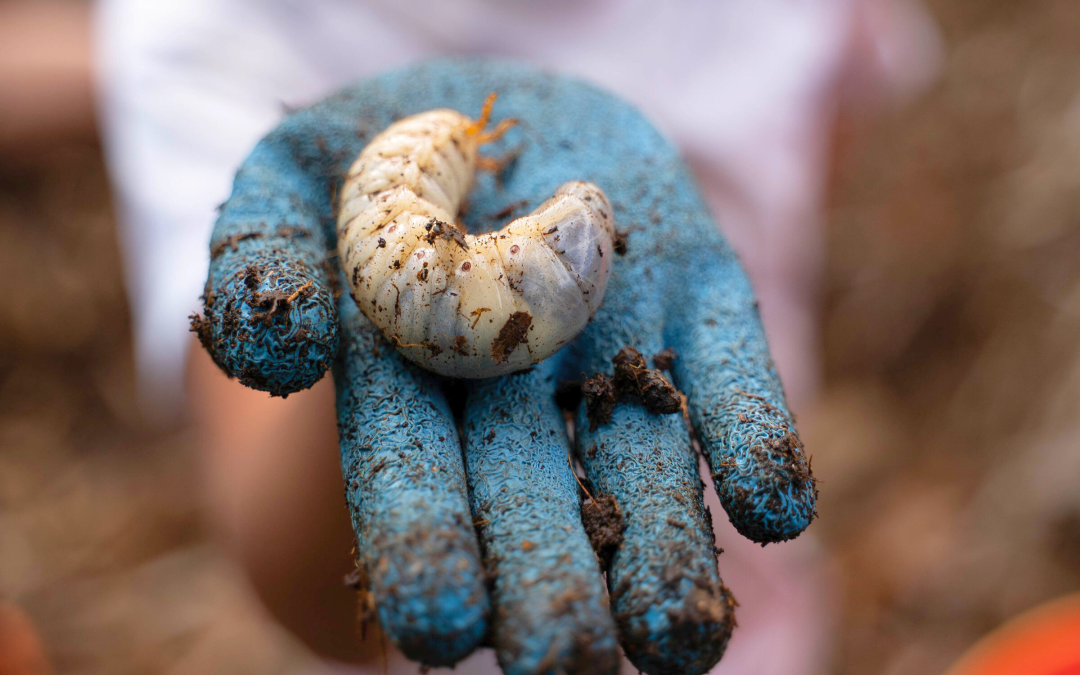
His goal has been to cultivate and harness the indigenous microorganisms—bacteria and fungi—naturally in the soil to build ‘āina momona, or fertile and abundant land.
“When the land is abundant, anything you grow just grows so much easier, and it’s not a struggle and the quality of what you’re growing is also reflected in that,” he said.
Anthony has been practicing a type of regenerative agriculture called Korean Natural Farming (KNF), or simply Natural Farming. The approach has been gaining traction around the world and in Hawai‘i as more food producers seek to reduce their reliance on imported fertilizers and pesticides—or forgo harmful chemicals altogether—and better nurture the lands they care for.
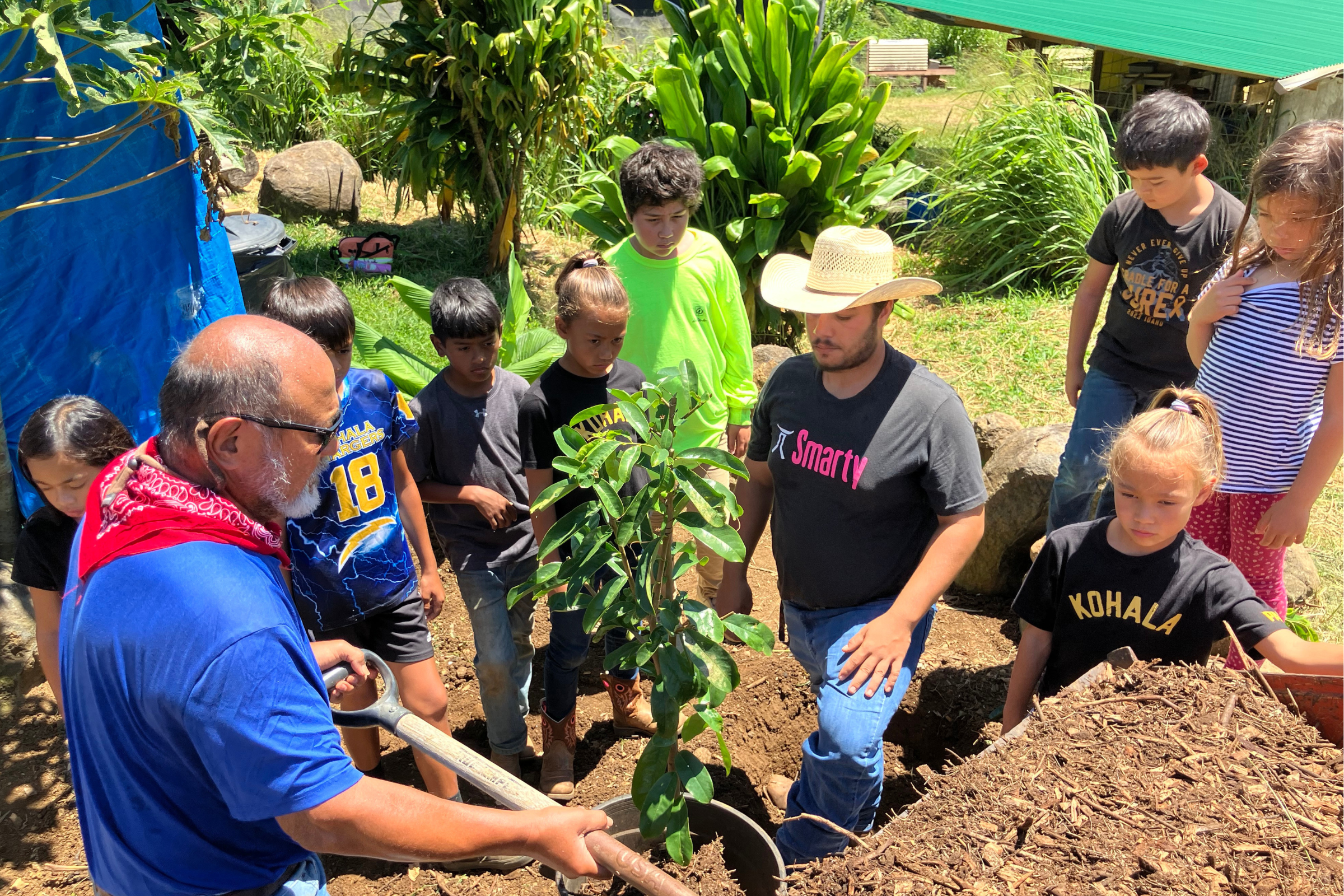
Kahua Pa‘a Mua in Kohala combines traditional Hawaiian farming and conventional practices, like Natural Farming, to help area families and keiki grow their own food. | Courtesy: David Fuertes
When we look at our ancestral knowledge, the soil is alive, you know, and in the soil, if we can feed the soil and feed them natural stuff that can increase the microorganism, the bacteria and the fungi, then we can naturally thrive in our local ecosystem.
Principles of Natural Farming
Natural Farming is based on centuries-old farming practices used in Asia and elsewhere and was systematized in the ‘60s in Japan. South Korean farmer Cho Han Kyu retrofitted it to Korea.
Today, longtime local advocates estimate there’s 2,000 growers using Natural Farming around the state.
One local training site is Hawai‘i Community College’s agriculture program, which has taught nearly 100 students the method since 2016. Assistant Professor Lew Nakamura said some of his students stick with Natural Farming after graduation because of its regenerative approach.
“Especially Hāmākua side, they get sugar, we just abused the land with herbicides, pesticides, heavy chemicals, so it’s really rebuilding the soil out there,” he said. “So, to me, this is the perfect example of how you can do it.”
Natural Farming also aligns with traditional Hawaiian practices. David Fuertes, executive director of Kahua Pa‘a Mua, said both focus on creating vibrant, healthy soil ecosystems and working in harmony with nature.
Kahua Pa‘a Mua is a Kohala nonprofit that blends traditional Hawaiian farming practices with Natural Farming, aquaponics and other contemporary methods to teach residents to cultivate their own food and achieve self-reliance.
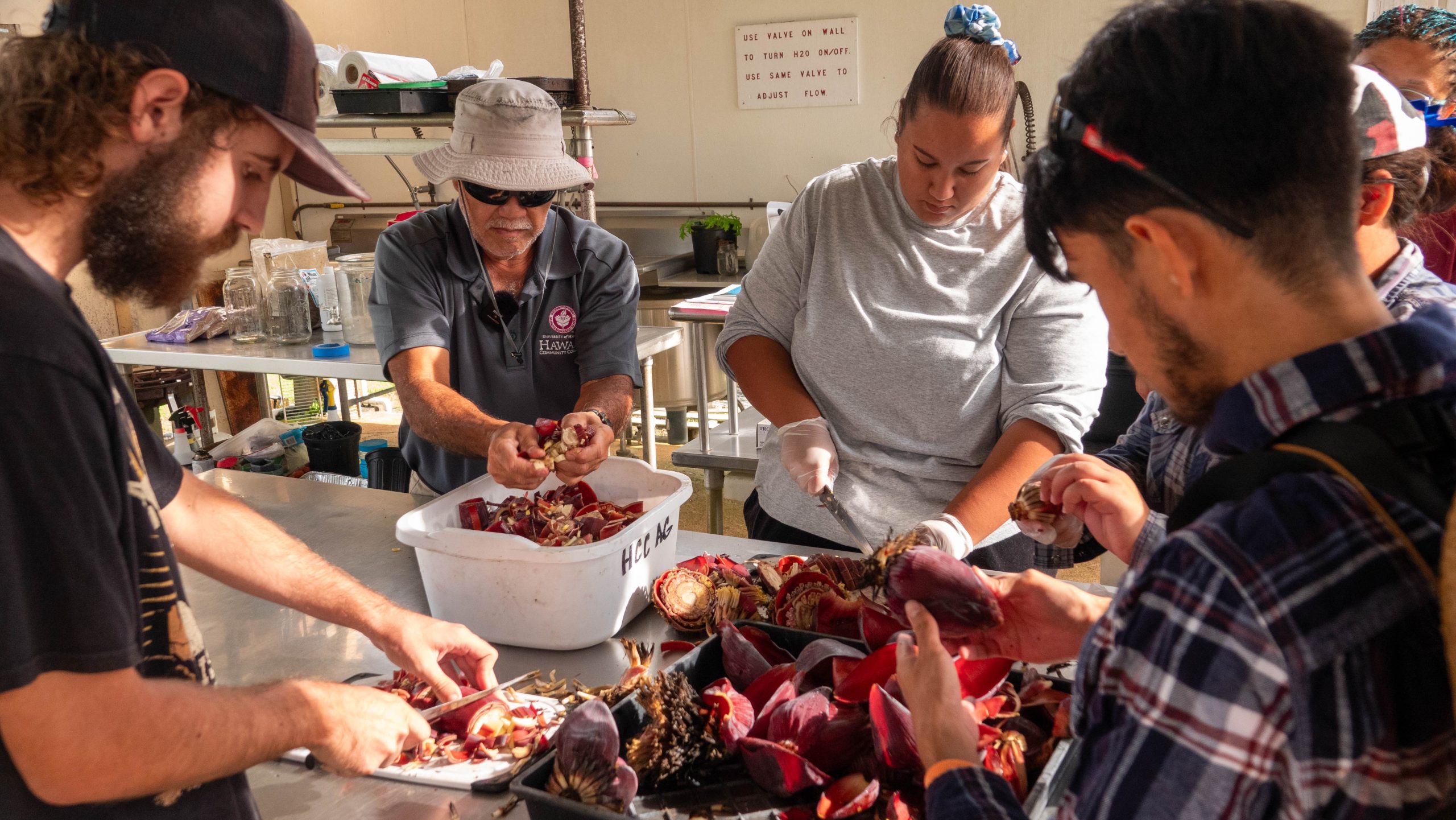
In addition to cultivating indigenous microorganisms, Natural Farming involves creating and applying a series of nutrient-rich mixtures made from locally available, organic materials.
“You’re not trying to, like, juice the plant or make the plant, like, big or anything,” said Drake Weinert, a Hawai‘i Island farmer who teaches the method through Natural Farming Hawai‘i. “You’re just trying to unlock its natural potential. And every plant has just like inert natural potential, just like a child—you feed them well and, brah, they’re gonna just be great.”
For example, spraying fermented plant juice made from guava on an ‘ulu tree growing in a grassy orchard essentially tricks the tree into thinking it’s in a forest, where it’ll thrive from the diversity of plants and microbes, he said.
‘All the Crops Just Thrived’
Local farmers note many successful results from Natural Farming efforts.
Weinert revitalized a strip of dead land in Downtown Hilo by amending the soil with biochar, indigenous microorganisms and halved coconuts. The microorganisms helped break down the toxins in the soil, while the biochar gave them a place to hold nutrients and created a stabilizing buffer, he said. At the same time, they grew kalo, ‘uala, papaya, and mai‘a.
“We ended up feeding 200 people right out of this ground that was just, you know, dead, and all the crops just thrived and did amazing,” he said.
Some farmers use Natural Farming to raise animals, using its deep-litter system. Indigenous microorganisms inoculate the system so that beneficial microbes suppress odor and deter flies. The system is then naturally ventilated and oriented for sunlight to encourage microbial fermentation of the animals’ waste.
Mike DuPonte, a retired Hawai‘i Island livestock extension agent, said there are 66 such systems across the state. They’re also in 29 countries.
In Wai‘anae, David Wong of Mountain View Farms, uses that system for his nearly 1,000 pigs. He also grows moringa, beets, green onions, lettuce and other crops. While the farm is organic-certified, Natural Farming has enabled it to eliminate the use of herbicides and pesticides and use 60% less water, he said.
He believes that Natural Farming is one way to help the islands become more food secure. With Hawai‘i importing 90% of its food, it’s estimated that Hawai‘i only has enough food supply to last five to seven days, according to the Hawai‘i Emergency Management Agency.
Island Harvest, an organic-certified farm in North Kohala, formerly used Natural Farming across its 750 acres of macadamia nut and some ‘ulu for six years, said Chris Trump, whose family owns Island Harvest. During that time, the farm saw increases in fruit size and yield, and macadamia trees usually considered lost to disease ended up thriving.
Trump teaches others in Hawai‘i and around the world about Natural Farming through his company, Biomei Natural Farming Solutions. Creating a sprayable, liquid version of indigenous microorganisms and using tractor-pulled sprayers enables Natural Farming to be done at scale, he said.
While Island Harvest isn’t currently using Natural Farming due to labor and equipment limitations on its farm, it hopes to one day restart it.

Not a Farming Panacea
Scientific evidence of Natural Farming’s effectiveness is limited because the approach depends on local conditions and resources, said DuPonte, who helped bring Natural Farming to Hawai‘i nearly 20 years ago while he was with the University of Hawai‘i’s College of Tropical Agriculture and Human Resilience.
In India, Natural Farming resulted in cowpeas with longer shoot and root lengths, larger leaf areas and seed weights, and more pods per plant and seeds per pod, according to a 2023 article in the International Journal of Agriculture and Environmental Research. The field experiment compared Natural Farming to a type of brown seaweed and a fermented liquid organic manure.
Locally, two UH field trials found that Natural Farming led to a higher abundance and diversity of beneficial bacteria in vegetable crop soil compared with conventional farming, according to a 2021 paper.
Other research evaluated three Pāhoa farms in 2011-2012, comparing Natural Farming to conventional farming—where synthetic inputs are used—or organic permaculture.
Results varied. One farmer growing soybeans saw improved soil health, slightly higher yields, and leaves with higher nitrogen content. Another farmer who grew kabocha saw little difference, though the crop had a powdery mildew infestation. The third farmer—which grew kale, beet, broccoli, onion and leek—saw an eventual increase in plant biomass but no significant soil-health change.
Two farmers reported costs and said they spent less on materials for Natural Farming. However, their labor costs were higher in the first year due to the time it takes to make and apply the inputs.
Today, farmers can use a drone spraying service or other technology to make that application process more cost efficient, Weinert said. Producing inputs, though, is still a challenge because growers don’t always want to make them, said DuPonte, who is a board member of Cho Global Natural Farming Hawai‘i. While some of the mixtures can be made in a week, others can take up to six months.
Anthony, also a board member of Cho Global Natural Farming Hawai‘i, creates and sells his inputs through his nonprofit, Aloha Organic. DuPonte said a couple others sell inputs too, but he’d love to see each island have an organization, like an agricultural co-operative, that can make and distribute the solutions at scale.
‘Agriculture of the Future’
With farm costs rising, especially for synthetic inputs, DuPonte said, Natural Farming can help make operations more economically viable.
“We are at disadvantage. We’re out here in the islands and we need to figure out how we can survive if the boats don’t come to Hawai‘i anymore,” he said. “And one of the methods is Master Cho taught us is you try to make your own amenities for farming in Hawai‘i using what you have on the islands to create the means to grow profitable crops.”
For Anthony, Natural Farming has given him tools to move his land’s previously unhealthy soil toward a state suitable for traditional Hawaiian farming practices. Traditional practices, he said, were based on a healthy ecosystem.
He believes that Natural Farming is not just a trend or fad.
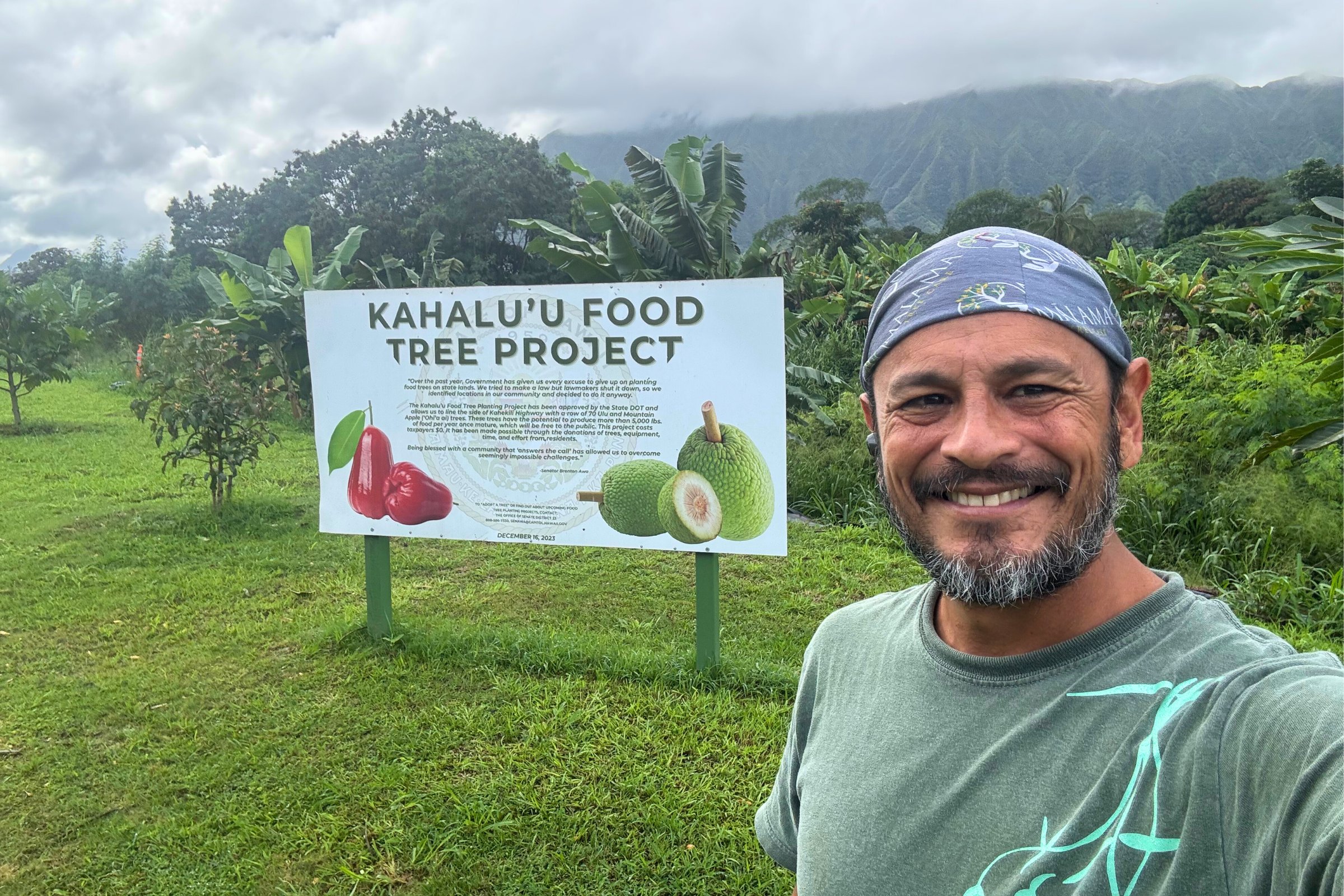
“This is the agriculture of the future,” he said. “And who knows? Maybe in 30 years, they’ll call KNF conventional because that’s what everybody is doing.”
Natural Farming Resources
The University of Hawai‘i’s College of Tropical Agriculture and Human Resilience has published several papers on how to practice Natural Farming:
- Indigenous microorganisms (2009, 2019)
- Fermented plant juice
- Lactic acid bacteria
- Water soluble calcium
- Diluted seawater
- Fish amino acid
- Oriental herbal nutrient
- Inoculated Deep Litter System piggery
- Poultry production
The following organizations provide Natural Farming education in Hawai‘i: