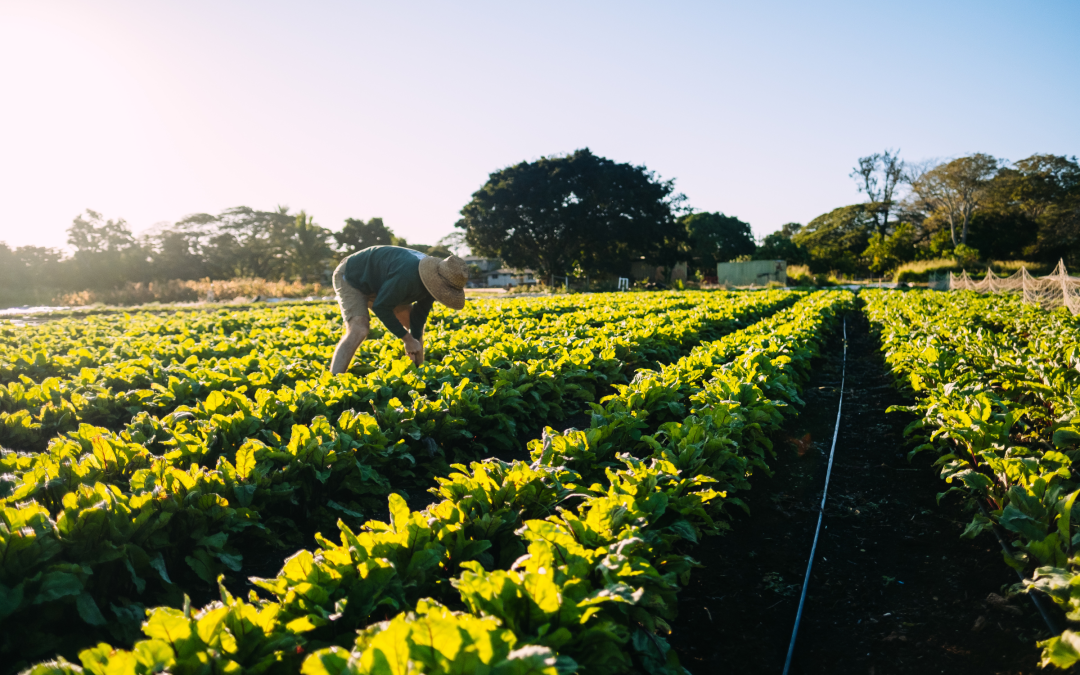
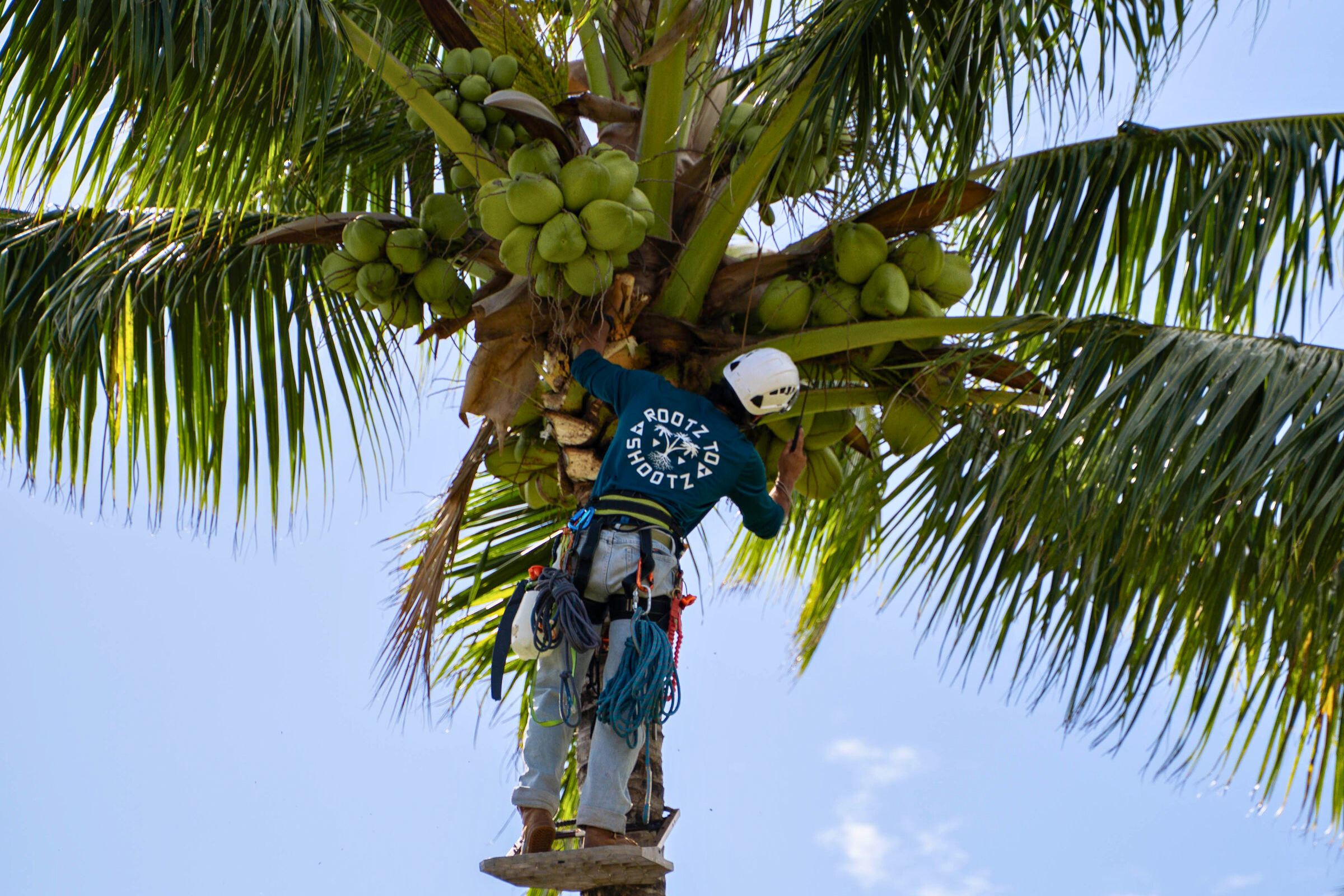
Every Friday afternoon, O‘ahu farmer Daniel Anthony of Hui Aloha ‘Āina Momona can be found climbing coconut trees around the Ko‘olau Range, removing old leaves and tending to green waste.
He then sprays the trees with a series of nutrient-rich mixtures made from fermented fish guts, fermented fruit, diluted seawater and other natural materials. He’ll also spray a mixture made from sulfur.
The mixtures are part of his Korean Natural Farming practice, a type of regenerative agriculture that focuses on working in harmony with nature. The solutions are meant to bolster the trees’ health and deter the invasive Coconut Rhinoceros Beetle, which has been in Hawai‘i for 12 years.
He’s been doing this work for over a year and said he hasn’t seen any beetles in the trees so long as the sprays are done regularly.
“We started to see trees come back to life,” he said.
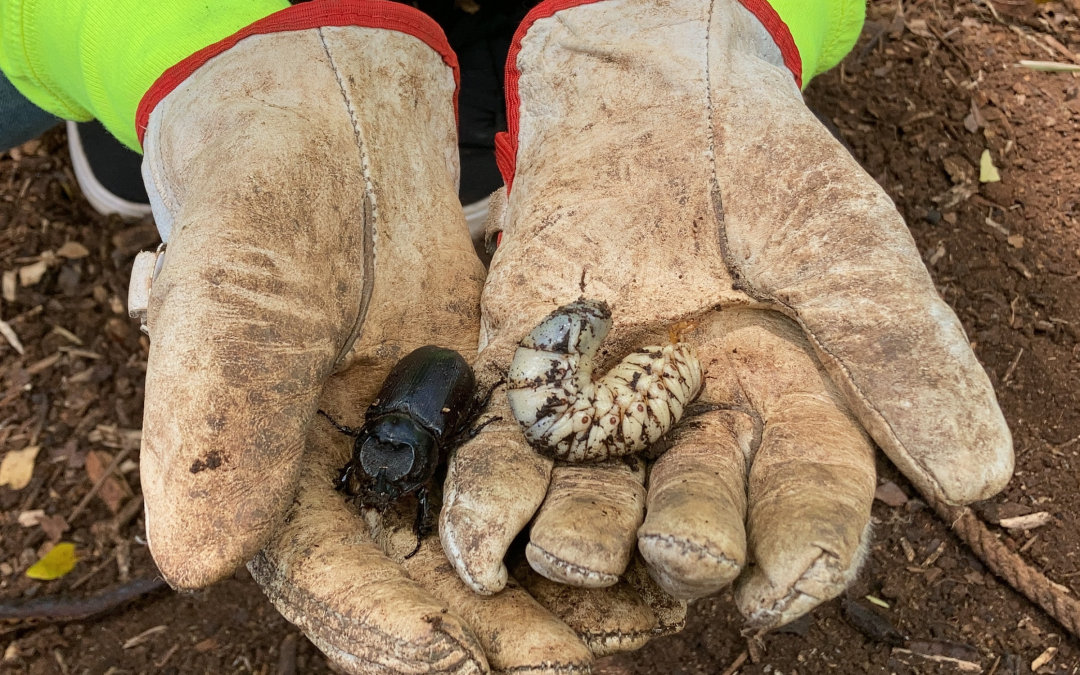
CRB primarily targets palm trees, like niu, which are important sources of food and cultural practices in the islands. The beetles can also eat other important local crops, like kalo, kō and mai‘a.
As the beetle has spread around the state, Anthony has experimented with a variety of nature-based remedies that are easy to use and that won’t harm those applying them. He’s one of several people testing such approaches.
“We have to have products (so) that our community can participate in this,” he said.
Controlling the Beetle’s Spread
Over the years, chemical pesticides have been a major part of Hawai‘i’s strategy to control CRB. Jonathan Ho, manager of the Hawai‘i Department of Agriculture and Biosecurity’s (HDAB) Plant Quarantine branch, said that’s because chemical pesticides’ efficacy against CRB has been proven.
Keith Weiser, deputy incident commander for CRB Response, added that eradication situations require going all-in and using every available tool. That’s been the case for Kona, where CRB Response and government partners have increased surveillance, encouraged green waste management and asked that potential host materials not be moved out of the area. Additionally, a little over 2,600 trees along the Kona Coast were treated with foliar sprays and trunk injections between July 2024 and September 2025.
Chemically treating trees requires removing fruits and flowers to protect pollinators. While chemicals may be suitable for landscaping trees, they don’t work for farmers and other community members who rely on coconut trees to eat and drink.
Wayne Tanaka, director of the Sierra Club of Hawai‘i, said the use of chemical pesticides on coconut trees also poses the question of how people will know coconuts are safe to eat or drink if all chemically treated trees aren’t labeled.
12 Years In: How Hawai‘i is Still Working to Curb the Coconut Rhinoceros Beetle
The invasive pest is present throughout O‘ahu and in parts of Kaua‘i and Hawai‘i Island. With a biocontrol solution still a couple years away, officials are urging community members statewide to stay vigilant and help stop CRB’s spread.
How to Help Hawai‘i Contain the Coconut Rhinoceros Beetle
Getting this invasive pest under control requires community-wide involvement. Here’s a quick guide to help you be part of Hawai‘i’s response.

Kaua‘i Races to Contain Coconut Rhinoceros Beetle
Several efforts are underway to find breeding sites and treat impacted trees, but many community members say that Kaua‘i needs collective, community-wide involvement to successfully contain and eradicate the beetle.
“There’s no real way to track where coconuts may have come from, which means unless you pick the fruit yourself from a tree that you know has not been treated, you could be taking a risk,” he said.
Ho said HDAB-treated trees on O‘ahu and and some in West Hawai‘i were wrapped with yellow tape and have metal tags.
He added that the department doesn’t require that all trees be treated with chemicals, especially since it recognizes that certain trees are used for food and have cultural significance. In those cases, the owner of the trees would have to find another way to mitigate the beetle. However, right now, there aren’t any good non-pesticidal treatments, he said.
The state is putting its hopes on a nudivirus that has been used to reduce CRB populations in other counties. Local studies are underway to determine its effectiveness and that it won’t harm other species important to the islands, Weiser said.
Turning to Nature
In the meantime, some community members are turning to various natural remedies to see what may work best for their individual situations.
Tanaka said some people on O‘ahu’s North Shore, which has a heavy beetle infestation, have experimented with basil oil and invasive seaweed deterrents. On Kaua‘i, E Ola Kākou Hawai‘i has tested basil oil, pa‘akai and Anthony’s sulfur mix.
Nākai‘elua Villatora, E Ola Kākou Hawai‘i’s po‘o pani (vice president), said its community of niu protectors are driven by their dedication to protect niu as vital sources of food and culture.
“It does require a lot more work and lot more attention to detail and more relationship to the trees, but this is essentially what kānaka Hawai‘i have done in the past,” she said.
Anthony said consistency is key when applying his Natural Farming mixtures. He uses a surfactant—typically Castille soap—to help his mixtures stick to the trees, especially in areas that get a lot of rain.
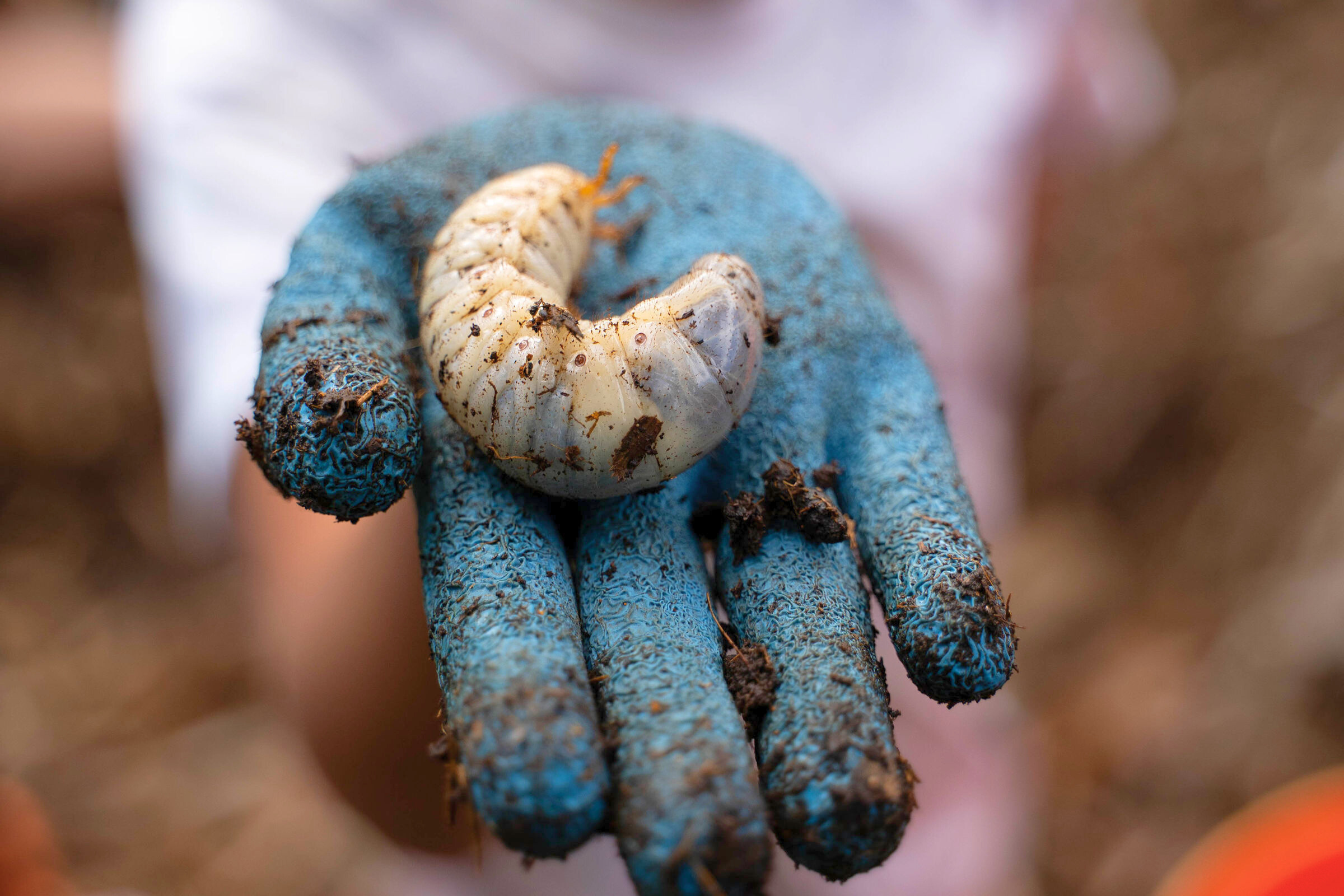
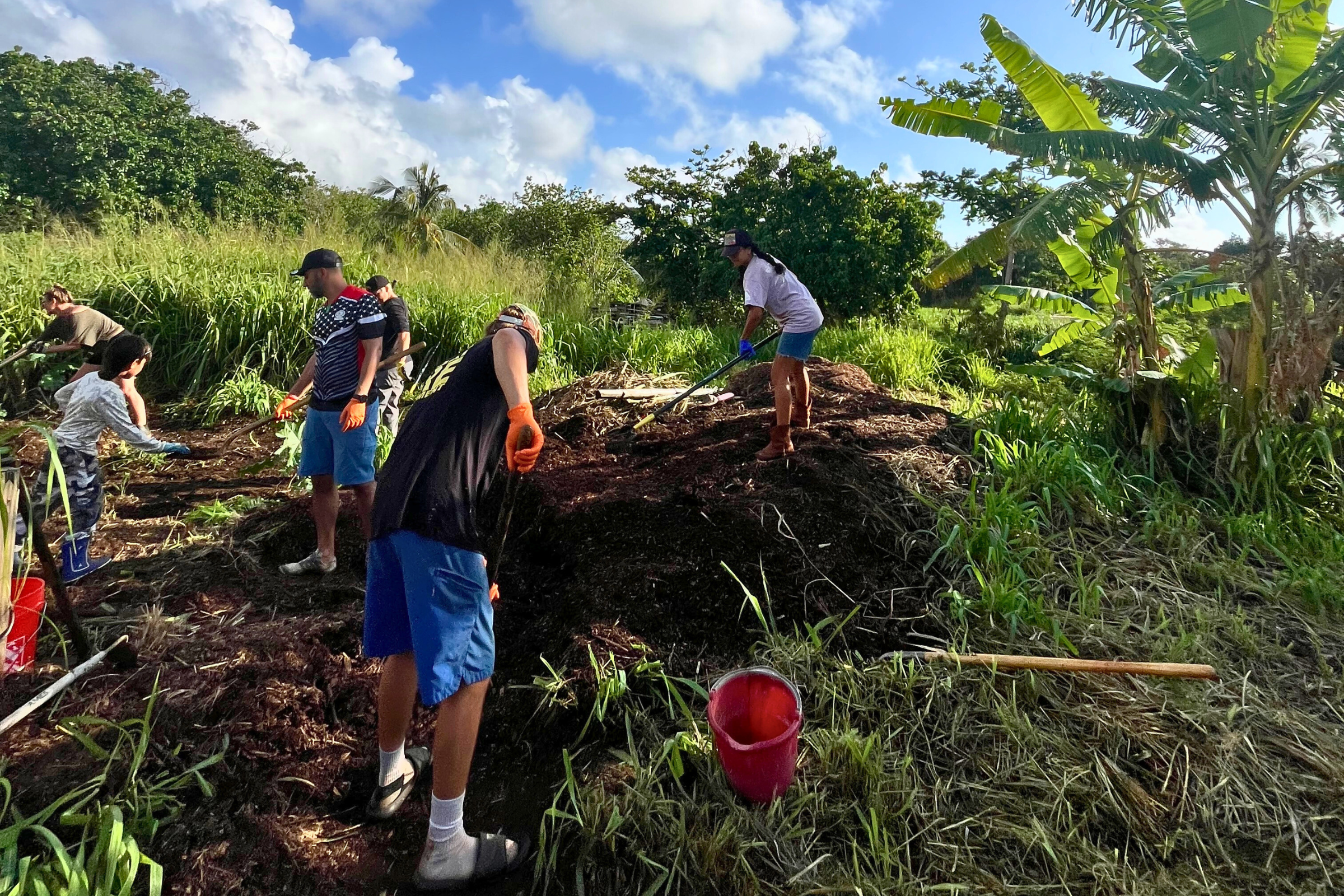
On the ground, he’s started using an insect-killing fungi called Metarhizium anisopliae to treat mulch piles. The fungi has been used in many countries to control CRB and is one of the most widely used biocontrol agents for insects globally.
He said he’s seen promising effects. One mulch pile in Kahana formerly had five to six beetles in each shovel scoop. In the six weeks since he sprayed the fungi, he only found 10 while sifting through the entire pile.
“We’re trying to be the practical guys and use what everyone says is working and is safe and really focus on being able to eat and consume coconuts,” he said.
He helps care for about 700 niu that kūpuna own or manage along the Ko‘olau Range. One of the biggest threats CRB poses, he said, is disconnecting people from cultural and subsistence practices associated with niu.
“I hope this CRB issue is sending a wake-up call particularly in the Native Hawaiian community about how critical this resource is to being lost,” he said.
Ho said HDAB is open to Anthony’s Natural Farming solutions, but their effectiveness would need to be independently verified. He added that managing the beetle at a landscape scale will require multiple approaches, especially because options for food and culturally important trees are limited.

One Tool in the Toolbox
At the University of Hawai‘i at Mānoa, Zhiqiang Cheng, a professor and extension specialist in the Department of Plant and Environmental Protection Sciences, has been looking at whether insect-killing fungi sourced from O‘ahu can help control CRB.
Out of 60 isolates collected from around the island, 15 killed 60% of CRB larvae in lab tests, and four were even more effective, killing 80%. Those four were Metarhizium anisopliae. In two small field trials, the four isolates had a 50% mortality rate.
His team also tested a commercial product BotaniGard, which contains a different fungi species, Beauveria bassiana, that’s already used to manage Coffee Berry Borer in Hawai‘i. It killed 60% of CRB larvae in a field trial. However, it’s not permitted for use against CRB in the islands.
Implementation of the four local Metarhizium anisopliae isolates or BotaniGard for CRB is outside of his purview. But, next year, he and his colleagues plan to travel to Southeast Asia, CRB’s native range, to collect additional biocontrol agents—including fungi, nematodes, viruses and other natural enemies—and determine if any are more effective than the local fungi isolates.
Still, Cheng cautions that biocontrol alone is not a solution.
“All the culture management, chemical control, biological control, everything we have, all the tools we have in the box, we need to utilize, fully utilize, in order to control CRB,” he said.
Help Kaua‘i Mitigate CRB
E Ola Kākou Hawai‘i is preparing to launch a community-based mapping project to document CRB breeding and feeding sites and beetle entrapments and treatment measures. To volunteer, click here.