Every first Tuesday for the last six months, laughter, singing and strumming could be heard in Anahola as lifelong musician Ipo Kahaunaele-Ferreira taught her neighbors how to play the ‘ukulele.
She’d teach them songs like Dennis Kamakahi’s “Kōke‘e,” Henry Waiau’s “Maika‘i Kaua‘i” and Israel Kamakawiwoʻole’s “Henehene Kou ʻAka.” In the process, the workshops provided a safe space for attendees to do something for themselves and enjoy one another’s company. The longer-term hope was that learning ‘ukulele would also provide a foundation for healing and healthy relationships.
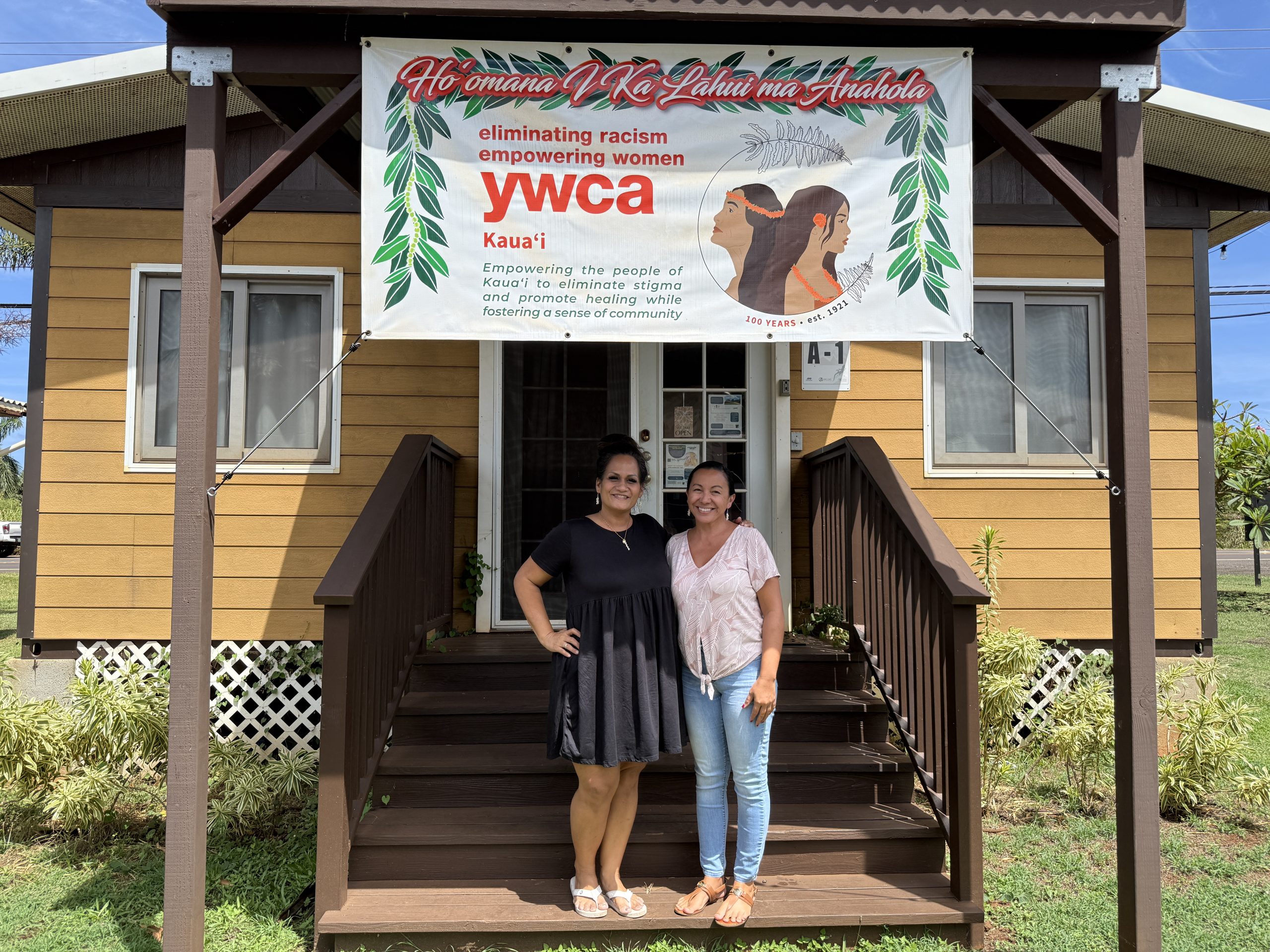
The monthly workshops were part of the YWCA Kaua‘i’s Ho‘omana I Ka Lāhui program, which provided culturally specific and trauma-informed services to those experiencing dating violence, domestic violence, family violence and/or sexual assault.
“This organization realized that ‘ukulele was prevalent in the community, so that’s how they could bring generations together,” Kahaunaele-Ferreira said.
While the program welcomed everyone regardless of ethnicity, Ho‘omana I Ka Lāhui aimed to especially reach the island’s Native Hawaiian communities. About 37% of those participating in the YWCA Kaua‘i’s crisis services program identify as Native Hawaiian, said Kawena Bagano, Ho‘omana I Ka Lāhui program director.
The program also sought to reach Pacific Islander and Filipino residents, who experience higher rates of domestic violence and are often overlooked in mainstream services.
The program was coming up on its first year when it was told its funding from the U.S. Department of Health and Human Services was being cut due to federal policy changes that eliminate support for culturally specific programs. While the YWCA Kaua‘i has sought other funding, for now, Ho‘omana I Ka Lāhui’s last day of operations is today.
“We were just getting our foot out there, like we were finally making noise, and then all of a sudden the door closes,” Bagano said.
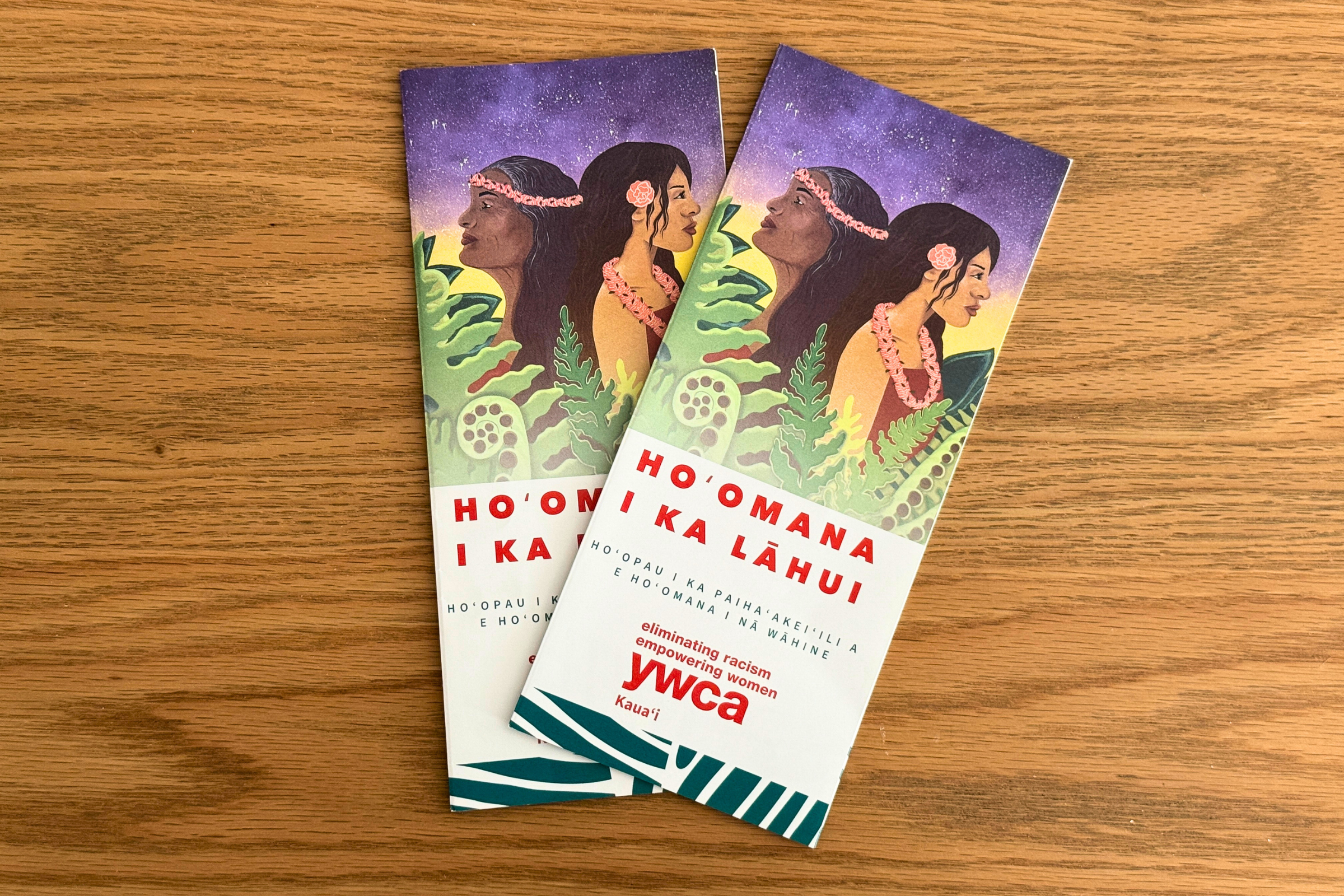
As of mid-September, Ho‘omana I Ka Lāhui taught prevention education to 135 Hawaiian culture and immersion school students, had nearly 90 cultural activity attendees and provided about a dozen people with crisis intervention services. | Noelle Fujii-Oride, Overstory
Domestic Violence in Hawai‘i
Domestic violence is a prevalent issue in Hawai‘i, according to the Hawai‘i State Coalition Against Domestic Violence (HSCADV).
Sometimes called intimate partner violence, domestic violence is a pattern of abusive behavior in a relationship that is used by someone to gain and maintain power and control over another intimate partner. It can happen in any relationship, and the abusive behaviors can be physical, verbal, psychological, sexual, spiritual and financial.
A 2024 HSCADV survey of 788 adult Hawai‘i residents found that Native Hawaiians and Filipinos experience the highest rates of domestic violence at 30% and 24%, compared with 18% of all adult residents.
In a 2024 HSCADV needs assessment of Native Hawaiian and Filipino survivors of domestic violence, many participants identified colonization as central to their communities’ experiences of domestic violence. Native Hawaiians were once among the most literate and educated populations in the world, but Western colonization led them to be displaced from their land, rights and culture. They also identified cultural connection and pride as ways to help prevent further violence.
HSCADV’s two reports recommended creating culturally specific domestic violence programs that are staffed by people who reflect the communities they serve and work with the entire family since both cultures strongly value family.
In addition to Ho‘omana I Ka Lāhui, the Domestic Violence Action Center’s Ho‘oikaika ‘Ohana program and Ka Lei o Ka Lāhui provide culturally specific domestic violence services.

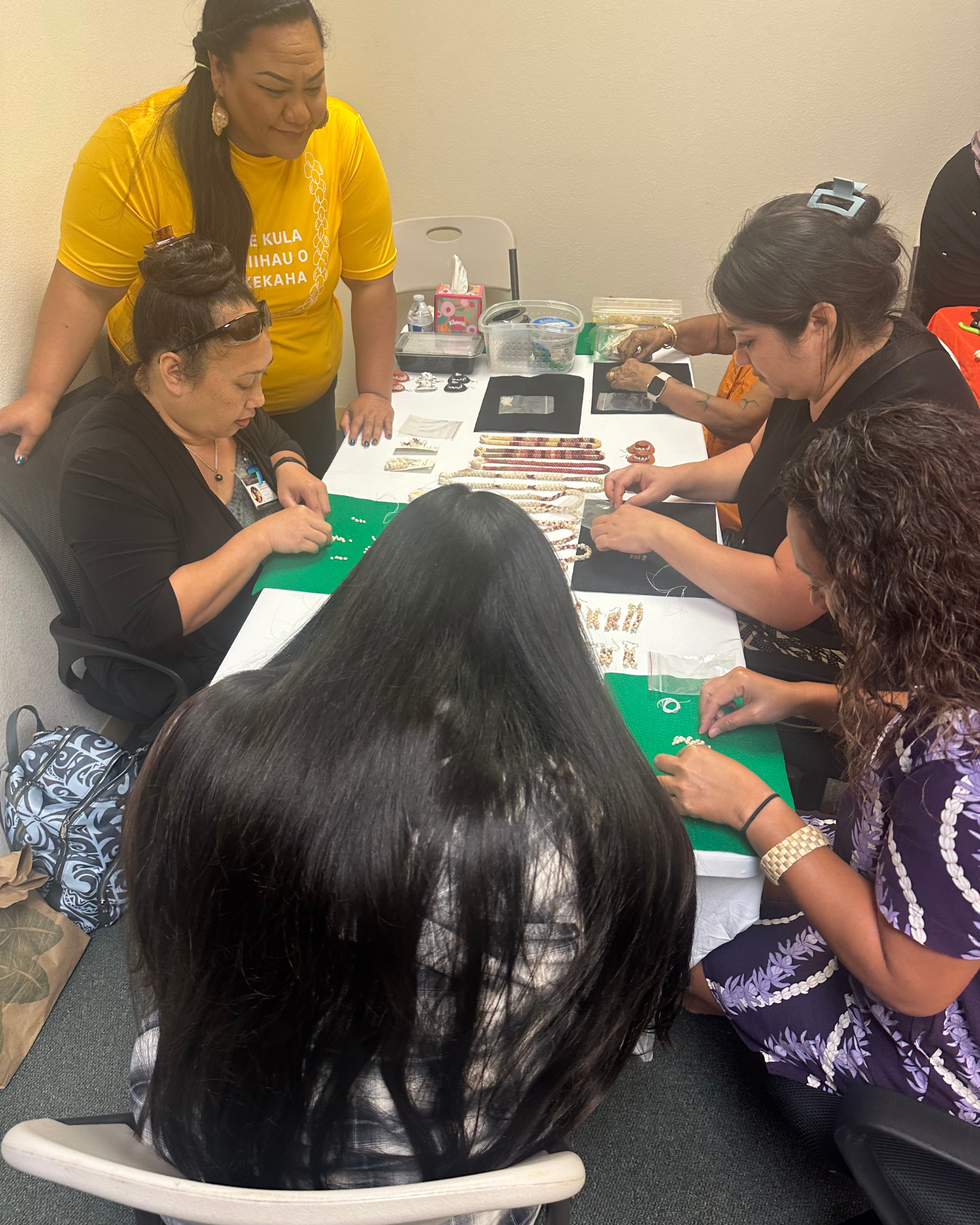
Community members make Ni‘ihau shell earrings at Ho‘omana I Ka Lāhui workshops earlier this year. | Courtesy: Kawena Bagano, Ho‘omana I Ka Lāhui
Rooted in Cultural Practices
The YWCA received its federal funding for Ho‘omana I Ka Lāhui in September 2023 and launched the program in October 2024 with offices in Anahola and Waimea. The intent was to maintain a presence in or near Kaua‘i’s Hawaiian Home Lands communities.
Bagano said the program was well-received by the two communities. One Waimea community member, for example, became emotional when listening to her share what the program would provide. That community member had lived experience with domestic violence and wished the program was there when she needed it.
A large component of Ho‘omana I Ka Lāhui was engaging community members in Native Hawaiian cultural practices, like ‘ukulele and Ni‘ihau shell jewelry making, to provide a foundation for healing and violence prevention.
Kahaunaele-Ferreira said many of Anahola’s families, including her own, grew up playing music, so she taught songs that kūpuna would know. The hope was that it would spark conversations when attendees practiced at home.
“If there’s tension, music will make it come down, so that’s a good venue for all of them,” she said. “That will lead to conversation, perhaps, and then lead to healing and then will lead to, ‘Oh, let’s try this song now.’ ”
Her workshops would draw a handful to a dozen attendees of all ages. Some came as families, while others came on their own. And sometimes, attendees would bring another family member with them to a subsequent workshop.
She also saw attendees gain self-confidence and let loose towards the end of the sessions, with everyone playing, singing or dancing hula.

Kyle Quilausing, a motivational speaker from Hilo, along with community members at a February talk story event in Anahola held by Ho‘omana I Ka Lāhui. | Courtesy: Kawena Bagano, Ho‘omana I Ka Lāhui
Valarie Cabreira, Ho‘omana services advocate, said the workshops gave attendees a haven and place of connection if they were going through a difficult time at home. While attendees would often focus on the workshop’s task, whether learning to strum or string shells, they’d inevitably start sharing with one another.
“I think coming together, it opens that door of conversation, of we share what we’ve been through and it’s a time for us to encourage and inspire one another, lift each other up,” she said.
The program also held community talk story sessions with Kyle Quilausing, a well-known motivational speaker from Hilo, and Kekoa Kekuawela Rosa, the director of training and technical assistance for Pouhana O Nā Wāhine, the Native Hawaiian Resource Center on Domestic Violence.
Quilausing shared his journey overcoming addiction and his experience with domestic violence, and Rosa shared his challenges as a kāne and māhū and how to restore rightful roles within the family and community.
Bagano said Quilausing’s talk drew about 80 attendees, most of whom were from Anahola. Altogether, she said the talk stories received positive feedback from attendees and were healing for the speakers because it gave them a chance to share their stories.
“I think it gave them an opportunity just to be heard,” she said. “Like someone is finally doing something about the problems that’s happening in our community.”

Ipo Kahaunaele Ferreira, also known as Lady Ipo (far right), teaches an ‘ukulele workshop in Ho‘omana I Ka Lāhui’s Anahola office. | Courtesy: Kawena Bagano, Ho‘omana I Ka Lāhui
Program Cut Short
On a Thursday afternoon, Bagano and Cabreira were clearing out Ho‘omana I Ka Lāhui’s Anahola office.
With family ties in Anahola, the pair said their community relationships sometimes made it easier for community members to share that they were experiencing domestic violence.
Bagano said she grew up in a dysfunctional family where violence was prevalent, but attending Hawaiian immersion school enabled her to ground herself in values of aloha and love for oneself and others.
“I think them just knowing me, my family, where I come from, makes it so much easier to talk about it, because they know I come from a very non-judgmental approach and I grew up in the culture,” she said.
Ho‘omana I Ka Lāhui was meant to run for two more years before its funding was cut. Bagano and Cabreira had hoped to expand its workshop offerings to include Samoan, Tongan and Filipino cultural activities.
The program was just taking off, starting conversations with the island’s Native Hawaiian communities and helping people see when what they were facing was domestic violence. The next phase would have been to get more people through the continuum of care.
Cheryl Lum, executive director of the YWCA Kaua‘i, wrote in an email that the sudden end of Ho‘omana I Ka Lāhui leaves a deep void on Kaua‘i.
“Its closure doesn’t just mean the loss of services—it means survivors who finally began to trust may now fall silent again, and youth who were just starting to see new possibilities for their futures may lose that spark,” she wrote. “For communities long underserved, this cut reinforces inequities and takes away a lifeline that wove culture, healing and safety into everyday life.”
Get Help on Kaua‘i
Call or text the YWCA Kaua‘i’s hotline at 808-245-6362. Calls are answered 24/7, and texts are answered between 9 a.m. and 10 p.m.
You can also chat YWCA Kaua‘i advocates here between 9 a.m and 10 p.m. Advocates can provide support, information, resources and referrals.