Editor’s note: This story mentions mental health, anxiety, depression, death and suicide. If you or someone you know may be experiencing a mental health crisis or has thoughts of suicide, contact Hawai‘i CARES 988 by calling or texting 988. The call center is available 24/7.
As a volunteer chaplain for Hawai‘i County’s police and fire departments, Renee Godoy has heard many stories about the calls officers and firefighters respond to and seen how those experiences, as well as the regular wear and tear of the jobs, can inevitably impact their health.
Some encounter sleep deprivation or insomnia from the long hours and occasionally non-stop calls. Some have trouble transitioning from their work life to home life, or experience anxiety, depression or burnout.
“The majority of them go into it, they really visualize themselves saving lives and being heroes, protecting victims, which they do, but they encounter so many tragedies that sometimes the amount of tragedy that they’re exposed to, it tends to overshadow that,” she said.
In April 2021, she created Friends of First Responders Hawai‘i Island to help aid first responders’ mental and relational wellness. With the emergency services departments having limited resources to provide such support, her nonprofit aims to help fill the gap.
“You can go to one bad call—a really bad one—and I don’t know anybody recovers from it, so they deserve all the help that we can give them,” Godoy said.
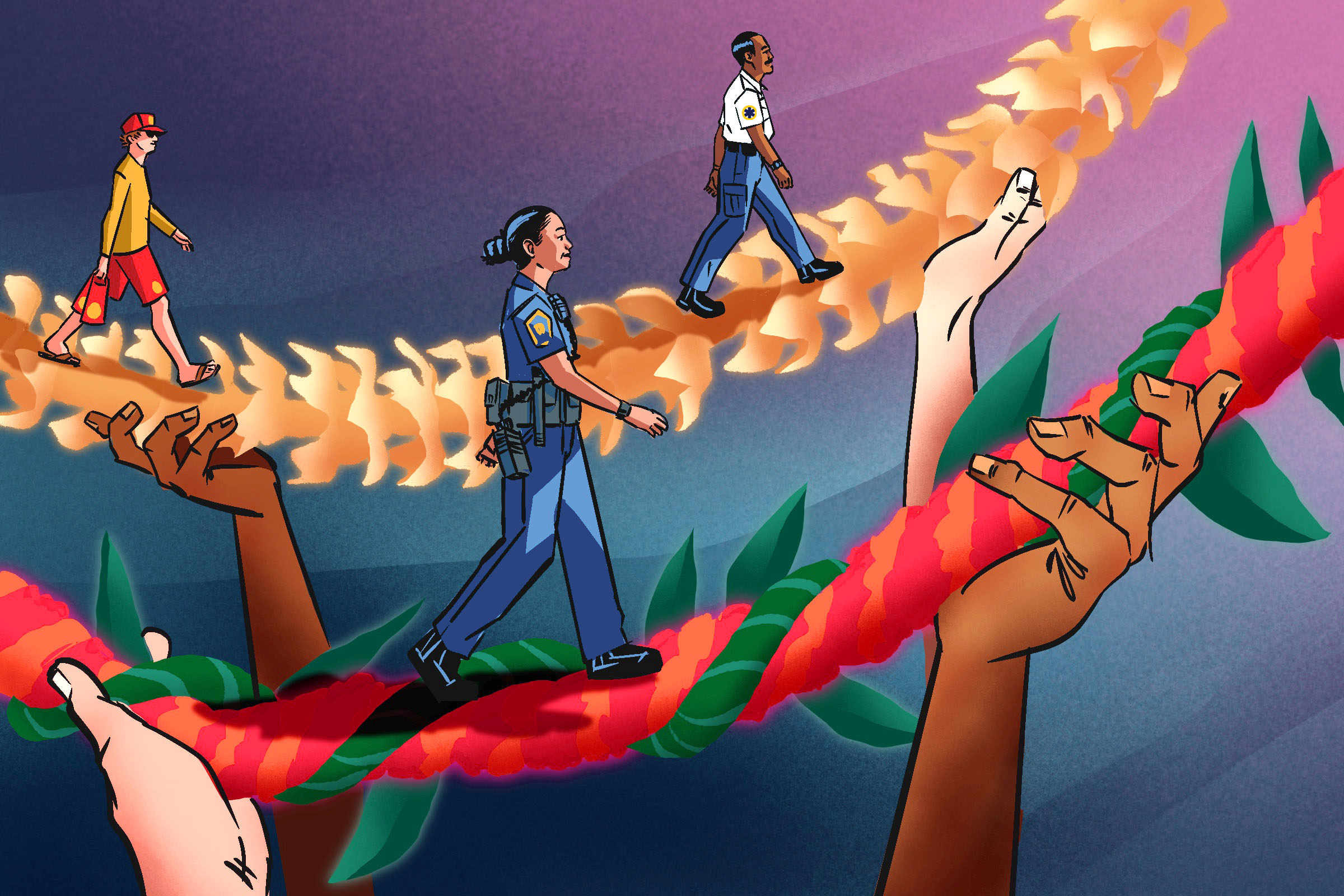
Friends of First Responders is part of a growing community-based support system helping those on the front lines stay resilient and supporting the families who share in their challenges.
“Law enforcement kids, fire kids, they have these conversations as well and they get overlooked, and the wives and the husbands, they all get overlooked,” said Micah Gauthier, co-founder of Mental Restorations Foundation, a Hawai‘i Island organization that engages first responders, veterans and their family members in community activities to support positive mental states. “They don’t have much of a voice, and we want to give them a voice.”

The Job Can Take a Toll
Studies have shown that first responders are at higher risk for mental health conditions like anxiety, depression, Post-Traumatic Stress Disorder and substance misuse due to their exposure to stress and trauma on the job.
Nationally, it’s estimated that about 30% of first responders develop behavioral health conditions, compared with 20% of the general population, according to a 2018 research bulletin by the Substance Abuse and Mental Health Services Administration.
Hawai‘i psychologist Alicia Rodriguez has been treating local first responders for the last 10 years, originally as an in-house psychologist with the Honolulu Police Department and now through her private practice, where she sees about 25 first responders a week. She also provides training and support to Maui’s police and fire departments and American Medical Response statewide.
She said about half of her sessions are related to the job stressors that impact relationships. First responders can sometimes get stuck in fight or flight mode, which can lead to them connecting less with loved ones.
Several retired and active first responders that Overstory spoke with said that they’ve seen greater awareness of and conversations around mental health. Over the years, departments have added employee assistance programs, chaplain services, and peer units and Critical Incident Stress Management teams made up of trained first responders who provide emotional support to their colleagues.
However, some stigma still exists, which can prevent some in need of help from accessing it. Rodriguez said part of the challenge is that the jobs are built around first responders being strong individuals who are always supposed to have it together.
“So if I say, ‘hey, I’m struggling with something, I need help’, now, people can question that and say, ‘oh, maybe you really cannot handle,’ ” she said. “And so I think we as a state, we’re behind the curve when it comes to not only understanding but also then supporting and providing the resources.”
She draws a parallel between being a first responder and surfing. Just as surfers can’t avoid getting wet, first responders can’t avoid being touched by the trauma they encounter.
“That doesn’t mean that they failed, that means they were doing their job and, yeah, sometimes it gets stuck on you,” she said. “And so it’s like shifting that perspective to normalize it, to say, nope, if they struggle, it’s not because they’re weak. It’s not because they can’t handle the job. It’s because they’re a human being who showed up and did a job that we needed.”
And not all first responders will experience adverse impacts from the job. Retired Kaua‘i fire captain Curtis Langstaff said having the training and ability to save someone’s life or help relieve pain gives some responders comfort and helps buffer some of the trauma they experience.
How Native Hawaiian Cultural Practices are Supporting First Responders’ Mental Well-Being
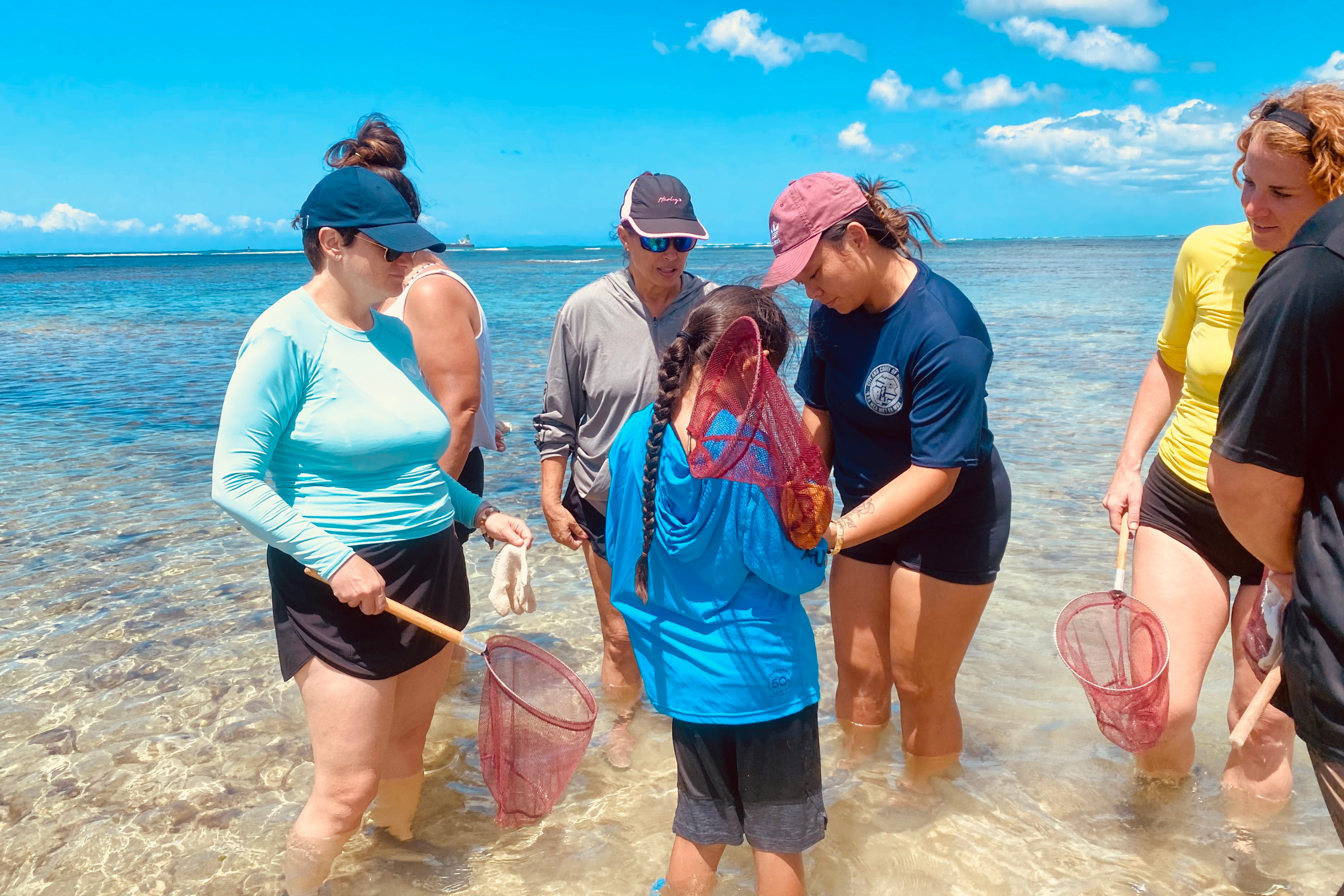
Several initiatives are engaging first responders in ‘āina and cultural healing practices to help ease the stress and trauma they face in their line of work.

The weight first responders carry is often felt by their partners and keiki, so Friends of First Responders also focuses on strengthening family relationships. | Courtesy: Friends of First Responders Hawai‘i Island
Support for First Responders and Their Families
There’s rarely a day when first responders are not in the news.
“I used to tell our church, when you read it and you’re upset, pray for the first responders on the scene, because they saw the child, they seen everything,” Godoy said. “They could see it, they could hear it, they could smell it, and they had to get up close to it. They couldn’t avoid it. And then what? How do you go home after that?”
Recognizing that first responder couples have unique challenges, Friends of First Responders holds retreats to help them strengthen their relationships.
At this year’s couples retreat in Waikoloa, 11 police couples, two firefighter couples and one Hawai‘i Department of Land and Natural Resources law enforcement couple participated in communications training, individual and couples assessments, and other activities facilitated by Washington State-based Stronger Families. The activities were part of Stronger Families’ OXYGEN program, which is designed to help couples better communicate, resolve conflict, increase empathy and create emotional intimacy.
Godoy said one couple was on the verge of divorce but attending the retreat helped them to decide their marriage was worth saving. After the retreat, 23 participants reported in a Stronger Families survey that they strongly agreed that the communication in their relationships, their ability to resolve conflicts and their overall relationship satisfaction will all improve, rating each statement an average of about 4.7 on a scale of 1 to 5.
Third generation firefighter Elijah Medeiros attended with his wife, Daysha. He said he’s seen how the stress of the job can hurt relationships and sometimes lead to divorce.
He and Daysha attended to help them ensure that their marriage stays strong for their four keiki. A member of Hawai‘i Fire Department’s peer support unit steering committee, he also wanted to experience it so he could encourage his colleagues to attend programs like this.
The couple said the retreat helped them identify each other’s strengths and how to be better for one another. Daysha Medeiros said the retreat also helped her realize she shouldn’t assume that her husband is fully present right when he returns home. Sometimes, he needs time to transition because his mind is still focused on a work call.
“It just helped me to understand him more with everything that he goes through and just being able to be more patient and supportive,” she said.
In addition to the couples retreat, the Medeiroses have benefited from Friends of First Responders’ gatherings for first responders’ significant others and family fun days. Daysha also volunteered volunteered at its keiki camp.
The keiki camp, held Oct. 6 to 10, drew 38 attendees, Godoy said. Some of the activities were facilitated by therapists to help keiki process their feelings, given that they’re also impacted by their parents’ jobs, such as when there’s news of any first responder being injured or losing their life while serving.
Elijah Medeiros said the organization’s services is invaluable: “This is the first time we’ve experienced people actually wanting to help first responders and couples build stronger relationships and stronger families.”
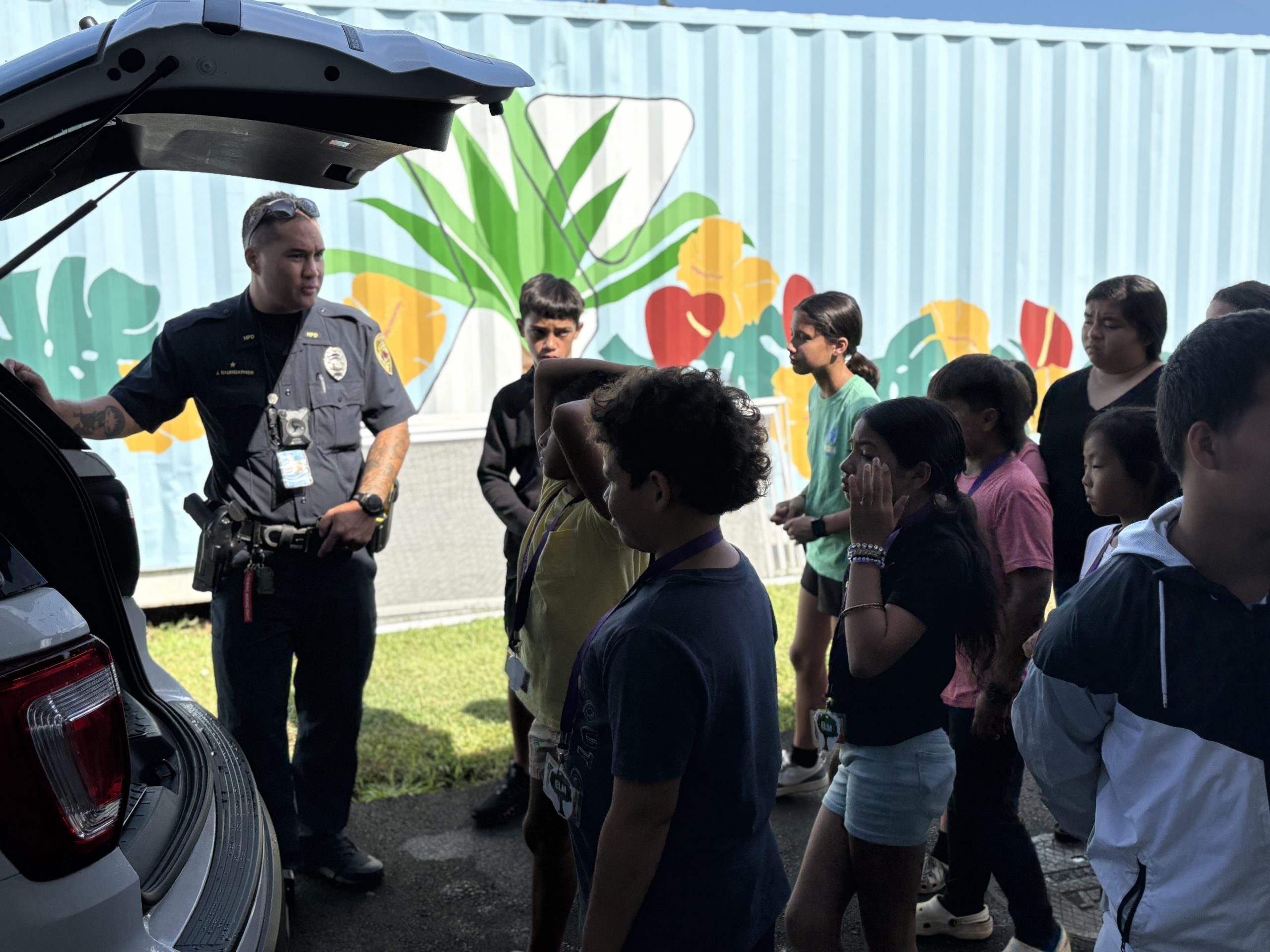
A Hawai‘i County police officer shows a group of keiki his patrol car at Friends of First Responders Hawai‘i Island’s first keiki camp earlier this month. | Courtesy: Friends of First Responders Hawai‘i Island
Being Friends of First Responders
Godoy said Friends of First Responders helps two to four first responder families a month outside of its major events. Its support varies from referring first responders to other mental or general health resources to covering airfare or donating miles for medical treatment to directly providing financial assistance during personal crises.
That was the case for an officer-involved shooting retreat held on the continent earlier this year. Friends of First Responders helped send two officers who experienced a shooting in the line of duty in the spring; one had been shot and injured, while the other had fired his firearm in a subsequent shooting.
The organization had to move quickly—Godoy learned about the retreat having space for the two officers only four days before they needed to be there.
The Hawai‘i Island officer who was injured said the retreat was instrumental to his healing because he learned why his body and mind were reacting the way they were, and he got to connect with other officers who went through similar situations.
“It definitely helps with kind of bringing together the fact that, you know, you’re not experiencing things all alone,” he said. He’s been with the department for about 10 years and spoke with Overstory on the condition of anonymity due to the sensitive nature of his work.
Friends of First Responders also raised funds to help support the officer’s healing. He said he’s grateful for the support he received from the organization and the broader community. Police rely on the community to help them do their jobs, whether there’s a manhunt occurring or the department needs information.
“I would think that most first responders would agree that the community support for this, for first responders, is instrumental in, you know, us continuing to do what we do every day,” he said.
Community Building Activities for Mental Health
Like first responders, veterans also face a higher risk of mental health challenges. And though the experiences of their jobs may be different, veterans and first responders can often relate to what one another has been through.
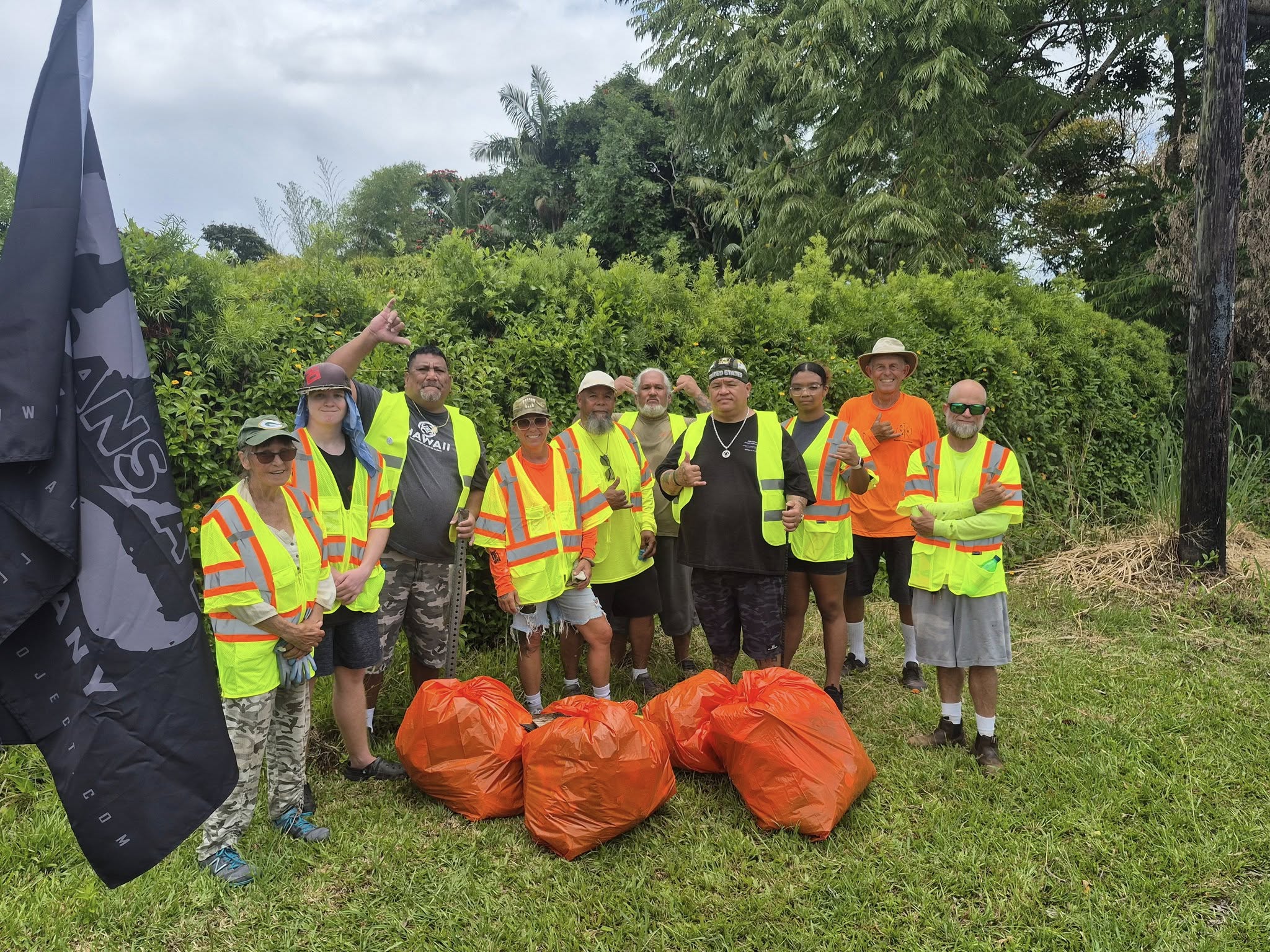
That’s why Hawai‘i Island nonprofit Mental Restorations Foundation organizes community activities that bring together veterans, first responders and their families with the goal of encouraging positive mental states.
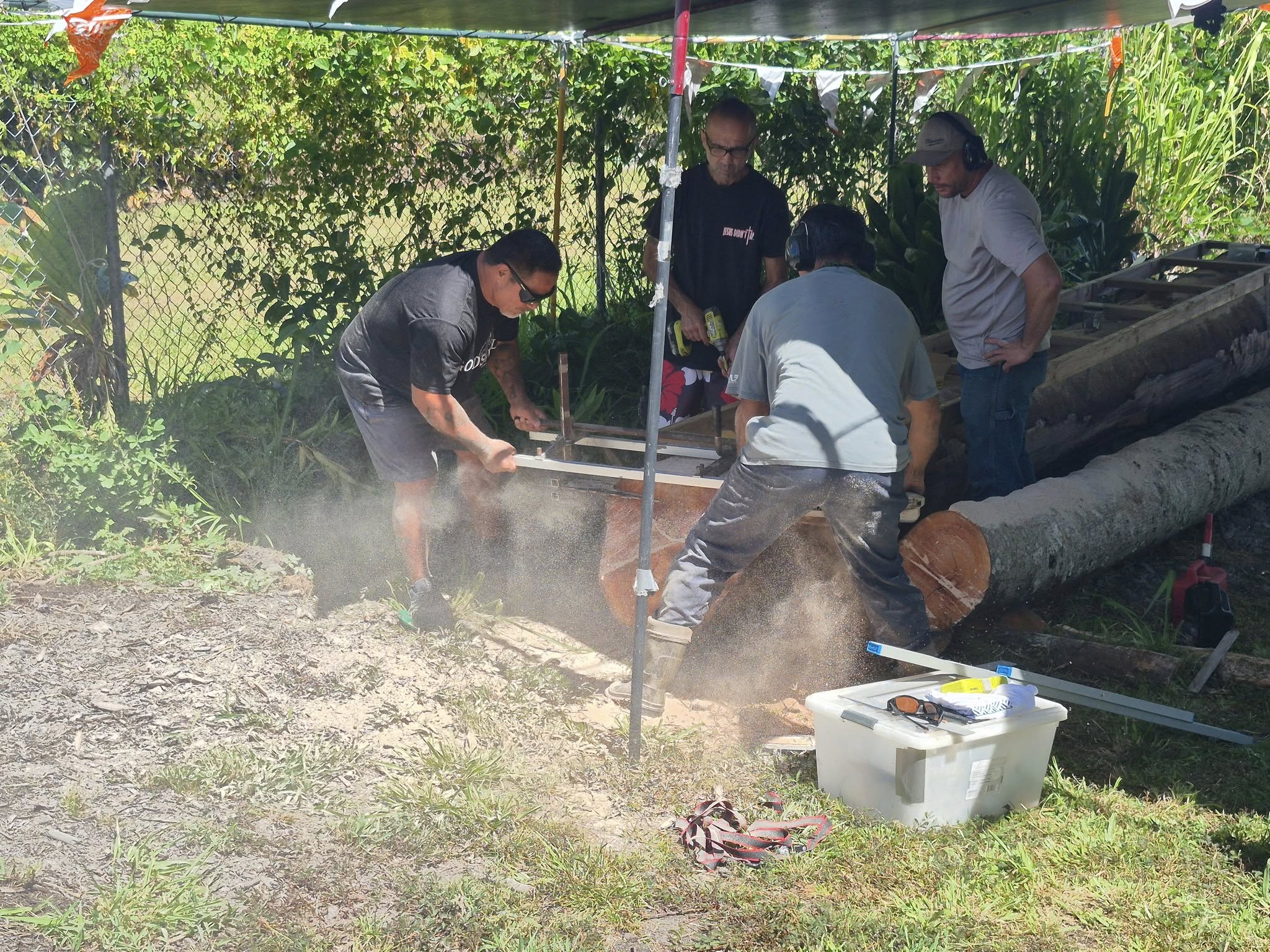
The organization hosts about two events a month, ranging from fishing, hiking, hosting barbecues, gardening, sightseeing, and canoe carving and paddling to cleaning roads and other volunteer work.
“Knowing that the activities bring us together, if it’s fishing, if it’s auto mechanics, or whatever it is, it brings people together, and then it’s the communications and it’s building up the relationships to have the tough conversations,” said Gauthier.
That’s important when many still fear that speaking openly about their mental health could put their jobs at risk, he said. Through the organization’s activities, he hopes that first responders will see there’s more people in the community that they can confide in.
Mental Restorations has about 400 first responder and veteran members. Gauthier estimates that about 80% are in Hawai‘i, while the rest are on the continent. Most of the organization’s activities are on Hawai‘i Island, where he lives, but the organization also holds some activities on Maui and Kaua‘i, where it has access to friends with boats and canoes.
Gauthier said he’ll occasionally check with a colleague in the Hawai‘i Fire Department to see if firefighters need an outing.
The organization occasionally raises donations to support veterans and first responders in need—such as helping a first responder family whose home burned down—and connects members to additional resources.
Gauthier also pairs members up to conduct buddy checks, or quick text messages asking how the other person is doing. About 40 members consistently do the buddy checks, though he estimates many more are participating because one person could be checking in on a handful of other people, in addition to their assigned buddy. Although the texts are simple, he said they’ve saved lives.
A Growing Community Network
Mental Restorations Foundation and Friends of First Responders’ efforts are part of a broader community-based support system for Hawai‘i’s responders.
That system includes a state project that uses culture and peer connection to prevent suicides among first responders and farmers, and a pilot study by Hawai‘i Island nonprofit Vibrant Hawai‘i to examine how mālama ‘āina can support first responders’ mental health.
O‘ahu nonprofit Ho‘ohanu and Hawai‘i Island business Longevity Labs add additional layers of support. Ho‘ohanu arranges for first responders to engage in Hawaiian cultural activities, and Longevity Labs has a first responder wellness program where it offers its regenerative therapies at no cost.
Hawai‘i Island firefighter Christopher Tsamoydakis participated in Vibrant Hawai‘i’s pilot study and Longevity Labs’ first responder wellness program and works closely with Friends of First Responders’ founder in his role as the department’s peer support unit and Critical Incident Stress Management coordinator. He said the community-based programs are helpful to have.
“You have a better sense of how your body reacts to things after taking part in these wellness practices, I’d say,” he said. “And just that knowledge is helpful in mitigating the stresses and the trauma that we are exposed to.”
While small, the community support system is growing. With Friends of First Responders largely serving Hawai‘i Island responders, Godoy said she and others are building relationships with peer support unit members and chaplains who want to see similar efforts on their islands.
One of those people is Zachary Sui, who just started his role as the Kaua‘i Fire Department’s first volunteer chaplain. Over time, he’ll build up a regular presence at the fire and lifeguard stations, with the goal of being another resource for first responders to lean on and just know that another person cares about them.
He said he’d love to see more community-based initiatives to support first responders’ mental well-being on Kaua‘i and has been brainstorming ideas, like holding an Ironman-like competition between firefighters and people incarcerated at Kaua‘i Community Correctional Center, where he also serves as a chaplain.
“The more community efforts we can see the better,” he said.
Resources for First Responders
- Crisis Text Line: Text BADGE to 741741 for counseling support.
- Frontline Helpline: Call 866-676-7500 to speak with former responders who can offer support to first responders and family members who are struggling with trauma.
- Hero’s Warm Line: First responders and their family and friends can call 844-833-HERO(4376), which offers resources and confidential peer support services.
- Friends of First Responders Hawai‘i Island: A Hawai‘i Island nonprofit that offers community support and resources to strengthen first responders and their families.
- Mental Restorations Foundation: A Hawai‘i Island nonprofit that organizes community activities for veterans, first responders and their family members to encourage positive mental states.
- Ho‘ohanu: An O‘ahu nonprofit that cares for first responders’ mental health and wellness by arranging for them to engage in Hawaiian cultural activities.
- No Nā Pua: A pilot study by Hawai‘i Island nonprofit Vibrant Hawai‘i that examined how mālama ‘āina can support first responders’ mental health and well-being.
- Longevity Labs First Responder Wellness Program: Based in Hawai‘i Island’s Waimea, the organization offers regenerative therapies (such as Vectored Electromagnetic Infrared, oxygen and light therapies) that support the body’s natural processes.
- Waves of Insight: A private practice on O‘ahu run by Alicia Rodriguez, who specializes in working with first responders. Her website also has a page of resources for first responders, such as stress management, tactical breathing, mental health awareness, and managing trauma and grief.
- National Alliance on Mental Illness resources for frontline professionals and their family members. Topics include peer and professional support, building resilience, wellness strategies, warning signs that you need to talk to someone, family support, etc.